The short answer
The British Virgin Islands are the Caribbean’s best overall sailing destination.
The BVI does not win because it is the wildest or most challenging itinerary. It wins because no other destination combines this much charter infrastructure, shelter, short-passage freedom and onshore variety so completely. The USVI comes closest. Saint Martin offers the best multi-culture loop, while the Grenadines deliver the most satisfying chain for experienced sailors who want the passages to matter as much as the anchorages.
How we ranked them
A great harbor is not automatically a great charter ground.
We scored 29 Caribbean destinations across 11 criteria: bareboat and crewed charter availability, protected anchorages, moorings, marinas, short inter-island distances, scenery, beginner and advanced conditions, provisioning and variety ashore.
Bareboat access and short passages carried the most weight, followed by protected anchorages and scenery. The ranking measures how complete an island-hopping trip can be, including the quality of the anchorages, passages and shore time.
Best overall sailing destination
British Virgin Islands
Sail a relaxed loop through Tortola, Norman Island, Virgin Gorda, Anegada and Jost Van Dyke.
The BVI is the Caribbean benchmark because almost everything works in a sailor’s favor: enormous bareboat and crewed fleets, protected water, short line-of-sight passages, abundant moorings and a different island experience every day. Norman Island’s caves, the Baths, North Sound, Anegada’s reef-fringed isolation and Jost Van Dyke’s beach bars create extraordinary variety without demanding punishing mileage.
A seven-night charter works; ten nights feels much better. Reserve popular moorings early in season, study the Anegada approach before committing and leave room to adjust for north swells. The BVI is forgiving, and sound seamanship still matters.
Best easy charter with protected scenery
U.S. Virgin Islands
Base in St. Thomas and spend the week among St. John’s coves, national-park moorings and nearby islands.
The USVI comes remarkably close to BVI ease. St. Thomas has strong charter infrastructure and simple provisioning, while St. John supplies beautiful protected bays, hiking access and an extensive mooring system. Water Island, Buck Island and the cays between the major islands keep passages short. Depending on charter permissions and clearance requirements, experienced crews can extend toward Culebra and Vieques.
Confirm where the charter company allows the boat to go; USVI, Spanish Virgin Islands and BVI cruising permissions are not automatically interchangeable. National-park mooring rules, customs requirements and cellular coverage should all be checked before departure.
Best three-culture circuit
Saint Martin / Sint Maarten
Link French Saint-Martin, Dutch Sint Maarten, Anguilla and Saint Barthélemy in one charter.
No other compact circuit changes personality so dramatically between stops. Major bases, marinas and provisioning around the lagoon support a serious charter industry; Grand Case and Marigot add French dining; Anguilla brings luminous beaches; Gustavia delivers an elegant harbor finale. Passages are short enough for a one-week itinerary but exposed enough to feel like real sailing.
This is an international itinerary. Carry passports, verify clearance procedures for every territory and budget time for bridges and lagoon access. Anguilla’s roadstead anchorages and the passage to St. Barts can become uncomfortable when swell or trade winds build.
Best pure island chain
Saint Vincent & the Grenadines
Sail south through Bequia, Mustique, Canouan, Mayreau, Union Island and the Tobago Cays.
The Grenadines are the Caribbean’s most rewarding continuous island-hopping chain. Each passage reveals another distinct landfall: Bequia’s Admiralty Bay, Mustique’s immaculate quiet, Canouan’s reefs, Mayreau’s tiny village, Union Island’s dramatic profile and the Tobago Cays’ reef-protected blue. The scenery and onshore variety are exceptional, but longer open-water legs and brisk trade winds reward a more experienced crew.
For a one-way route, confirm whether the operator permits it and how the boat returns. Otherwise build a realistic round trip from St. Vincent or Grenada. Reef navigation, boat boys, park fees and strong acceleration around island ends all deserve a proper briefing.
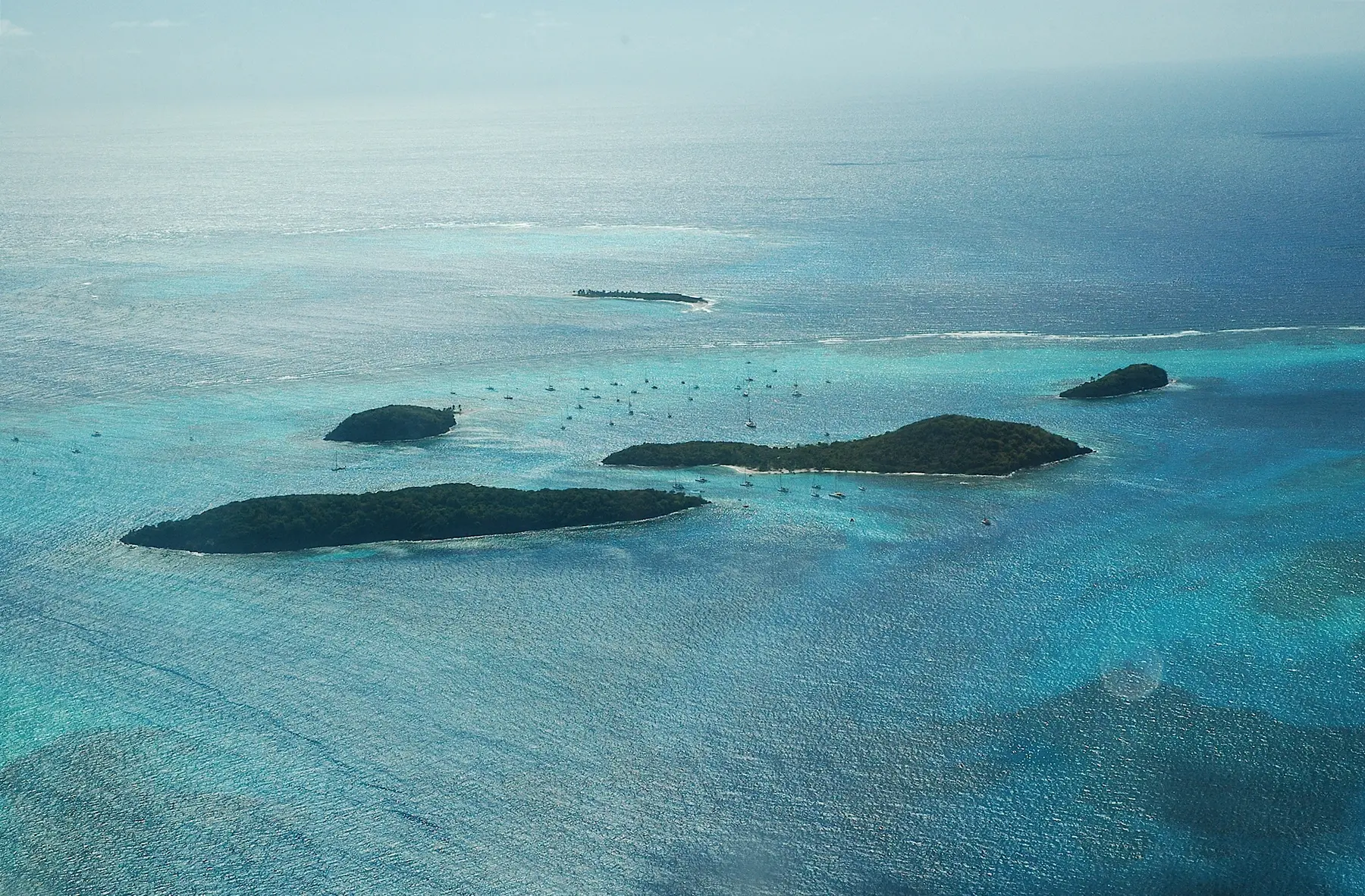
The Grenadines · A chain that rewards the journey
The next island is always visible—and never quite the same.
Bequia, Mustique, Canouan, Mayreau, Union and the Tobago Cays form one of the world’s great natural sailing itineraries.Best calm-water cay hopping
The Abacos
Trace the protected Sea of Abaco between Marsh Harbour, Hope Town, Great Guana Cay and Green Turtle Cay.
The Sea of Abaco creates a nearly ideal small-island cruising ground: short passages, luminous shallow water, useful marinas and settlements that feel made for arriving by dinghy. Elbow Cay, Man-O-War Cay, Great Guana Cay and Green Turtle Cay give the route more onshore texture than many Bahamas itineraries. The protected sea is approachable, while the Atlantic side adds challenge when conditions cooperate.
Shallow water still requires disciplined navigation. Use current charts and visual piloting, confirm post-storm marina and channel conditions and avoid building an itinerary that depends on a single exposed cut. Draft matters here—sometimes with uncomfortable specificity.
Best remote-cay scenery · tied score
The Exumas
Follow the island chain from Nassau toward the Exuma Cays Land and Sea Park.
The Exumas deliver the ranking’s most cinematic island hopping: more than 100 miles of cays, sandbars, empty beaches, clear cuts and protected park anchorages. Highbourne Cay, Warderick Wells, Staniel Cay and the countless unnamed shallows between them can fill a week without repetition. It ties Grenada on total score, taking the higher list position for extraordinary short-hop scenery and cay density.
The beauty is shallow. Read water color, understand tide and current in the cuts, protect the park and provision seriously before leaving Nassau. Crews without Bahamas piloting experience should consider a local captain for the first day or choose a crewed charter.
Best southern charter base · tied score
Grenada
Use Grenada’s full-service marinas to begin a route through Carriacou, Petite Martinique and the southern Grenadines.
Grenada matches the Exumas on overall score for a very different reason. Protected southern bays, excellent repair and provisioning services and substantial charter fleets make the island a strong operational base. Sail north and the trip quickly becomes an archipelago: Carriacou’s Tyrell Bay and Sandy Island, Petite Martinique and the lower Grenadines create a route with genuine cultural and geographic depth.
The northbound passages are windward and can be wet; southbound returns are generally friendlier. Clear in and out correctly when crossing between Grenada and Saint Vincent & the Grenadines, and leave a spare day for the final passage.
Best mix of history and open-water sailing
Antigua & Barbuda
Circle Antigua’s anchorages, then add Barbuda when the forecast and crew are ready.
Antigua combines a mature charter base with one of sailing’s great historic harbors. English Harbour and Nelson’s Dockyard anchor the itinerary; Falmouth, Green Island, Jolly Harbour and Carlisle Bay provide varied stops around the coast. Barbuda adds a genuine offshore passage and a radically different low-lying landscape. The island works for mixed-experience crews, but its exposed reefs and lively trades keep it interesting.
A circumnavigation should follow weather, not a rigid clockwise promise. Secure the dinghy carefully in swell, check Barbuda’s current anchoring and local-guiding requirements and give reefs off the east and south coasts the respect their chart symbols politely request.
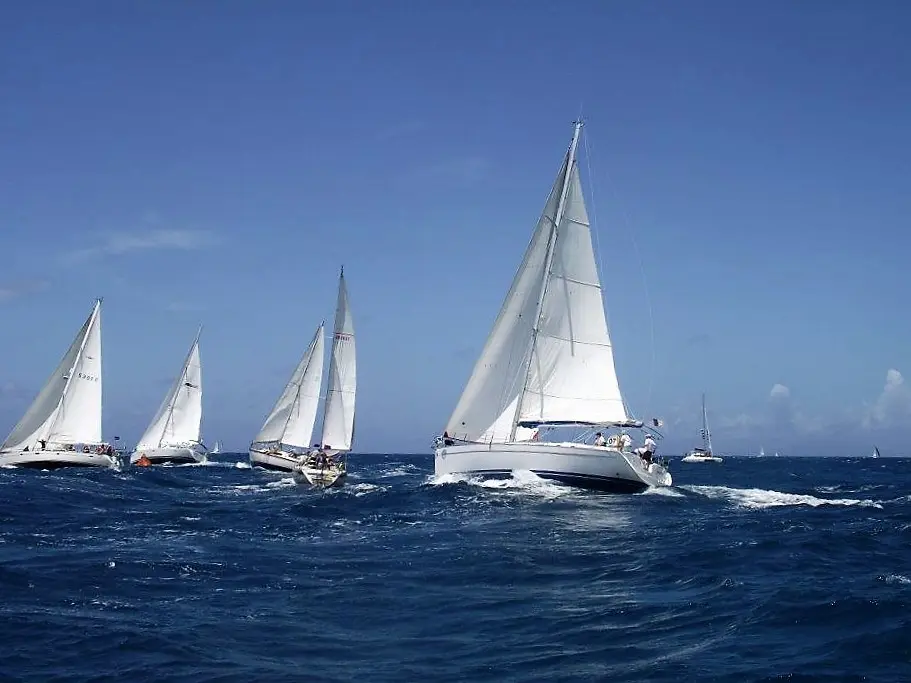
Antigua · Where the trade winds have opinions
Protected harbors on one day. Serious blue water on the next.
Antigua’s appeal lies in range: historic dockyards, easy coastal anchorages, active racing culture and a meaningful offshore passage to Barbuda.Best French Caribbean variety
Guadeloupe
Build a culturally rich loop through Les Saintes, Marie-Galante and Guadeloupe’s contrasting coasts.
Guadeloupe is a genuine archipelago built for multi-island cruising. Les Saintes offers one of the Caribbean’s loveliest arrivals; Marie-Galante adds beaches, rum and a slower rural rhythm; La Désirade feels remote despite manageable distances. Strong charter support, French provisioning and excellent scenery create a sophisticated route with variety and breathing room.
French charts, buoyage and clearance procedures deserve advance review. Trade-wind exposure differs sharply by coast, and the channel crossings can be lively. Reserve enough time ashore; racing through Les Saintes solely to improve the day’s average speed is a character flaw.
Best dramatic charter base
Saint Lucia
Start from Rodney Bay or Marigot Bay, sail beneath the Pitons and extend north or south.
Saint Lucia’s coastline provides the ranking’s most theatrical backdrop. Rodney Bay offers a substantial charter base and provisioning; Marigot Bay brings shelter and atmosphere; Soufrière places the Pitons directly above the anchorage. The island is also a strategic gateway: Martinique lies to the north, while Saint Vincent and the Grenadines continue south. Those open-water connections help the score, even if they are not beginner passages.
A Saint Lucia coastal week is different from an inter-island charter. The channels to Martinique or Saint Vincent can bring strong trades, Atlantic swell and acceleration zones. Match the itinerary to the crew, verify mooring arrangements near Soufrière and keep valuables managed at every stop.
Before you sail
The ranking chooses a destination. The forecast still chooses the itinerary.
Charter limits, customs procedures, park rules, mooring systems and marina conditions change. Confirm them directly before departure. Match the boat, route and season to the crew’s recent experience—especially for shallow Bahamas piloting, Grenadines passages and exposed channels between the larger Windward Islands.
Carry current charts and weather information, protect seagrass and coral, use legal moorings and build at least one flexible day into the plan. A beautiful itinerary is a proposal, not a blood oath made to a spreadsheet.
More Caribbean, carefully ranked.