Know the archipelago
The Bahamas’ great cruising room.
The Abacos stretch across a 120-mile chain of low cays, pine-covered mainland, sheltered shallows and small settlements whose identities remain tied to boats. The most rewarding trip moves between them by sailboat, private charter or local ferry.
A brief history
Lucayan people lived throughout The Bahamas before enslavement and forced removal by Spanish colonizers devastated Indigenous communities after European contact. British settlement expanded later; after the American Revolution, Loyalist families and free and enslaved people arrived from the American colonies.
Boatbuilding, wrecking, fishing, sponging, farming and timber shaped Abaco life. African-Bahamian culture is foundational, while Loyalist-era architecture remains visible in Hope Town and New Plymouth. Hurricane Dorian struck the northern Bahamas in 2019 with catastrophic force; recovery remains part of the daily community story.
What the Abacos are most known for
Shallow-water sailing, Hope Town’s candy-striped lighthouse, boatbuilding on Man-O-War Cay, the villages of New Plymouth and Hope Town, bonefishing, coral reefs, long pale beaches and water so clear that “reading the color” becomes part of navigation.
Geography
Great and Little Abaco form the mainland spine. A long string of cays—Green Turtle, Great Guana, Man-O-War, Elbow and many smaller islands—protects the Sea of Abaco from the open Atlantic. The same shallow banks that create the color also make draft, tide and daylight serious planning factors.
Map & orientation
One mainland. A necklace of cays.
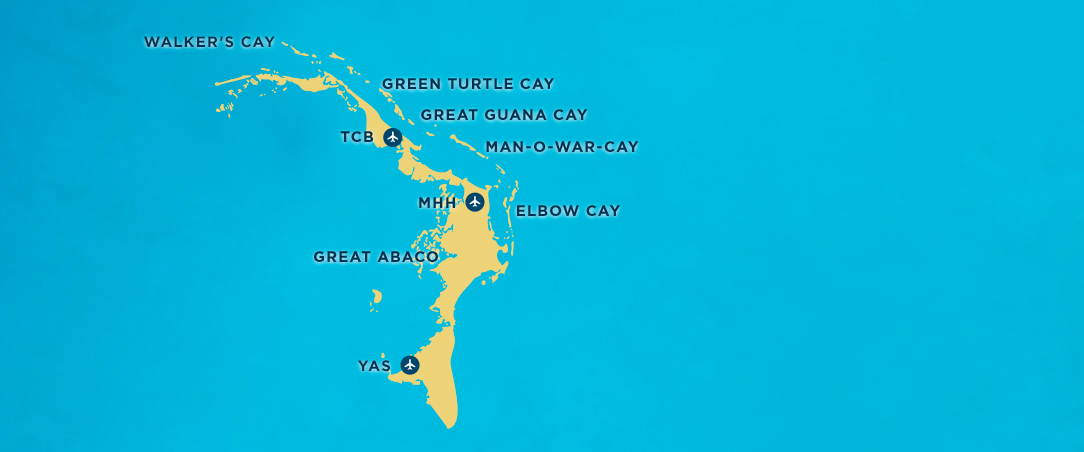
Marsh Harbour is the main air, ferry, provisioning and charter hub. Treasure Cay is the road-and-ferry gateway to Green Turtle Cay.
Plan your trip
Winter trades. Spring sweetness. Summer caution.
December–April
Drier weather, cooler evenings and consistent breeze. Cold fronts can bring strong northerlies and rough Atlantic inlets, so “prime season” still requires judgment.
Late April–June
Warmer water, fewer boats and often gentle sailing. Regattas in The Abacos adds energy in June; heat, showers and storm exposure begin rising.
July
Hot water, humid days and a quieter cruising ground. Thunderstorms and tropical-weather risk require flexible plans, while some businesses reduce hours.
August–November
The wettest and most hurricane-sensitive stretch, with August–October carrying the greatest concern. Charter fleets and small businesses may reduce operations.
Are the Abacos hurricane-safe?
No. The northern Bahamas sit squarely in the Atlantic hurricane region. Hurricane Dorian devastated Great Abaco and nearby cays in September 2019. From June through November, use refundable arrangements, strong insurance and an actual evacuation plan.
Arrivals & ferries
Fly to the mainland. Ferry—or sail—to the cays.
Leonard M. Thompson International Airport (MHH) at Marsh Harbour is the most useful gateway for central Abaco and charter trips. Treasure Cay Airport (TCB) is better positioned for northern Abaco and Green Turtle Cay when flight schedules cooperate. Connections commonly run through Nassau or South Florida.
Fly to Marsh Harbour
MHH sits roughly ten minutes by taxi from the major marinas. Continue by ferry from The Crossing or the operator’s current Marsh Harbour terminal to Hope Town, Man-O-War or Great Guana.
Fly or drive to Treasure Cay
From the airport or central Abaco, taxi to the Green Turtle Cay ferry dock north of the Treasure Cay entrance. Boats cross to the cay on a weather-dependent schedule.
Marsh Harbour ↔ Hope Town
Frequent passenger service in season. Confirm the exact terminal and last return before leaving your luggage unattended with optimism.
Marsh Harbour ↔ Man-O-War
Useful for day trips and overnight stays; Sunday and off-season service may be limited.
Marsh Harbour ↔ Great Guana
Schedules and departure points have changed over time. Verify directly with G&L.
Treasure Cay dock ↔ Green Turtle
The standard passenger connection for New Plymouth and the Green Turtle resorts. Taxis meet many departures by arrangement.
Choose your base
Where to stay in the Abacos
Best first base for charm, beaches & dining
Hope Town · Elbow Cay
Pastel cottages, the striped lighthouse, golf-cart lanes and both Atlantic and Sea of Abaco shores create the most complete land-based stay. It is refined but still unmistakably maritime.
- Nearby
- Hope Town Harbour, Elbow Reef Lighthouse, Tahiti Beach, Garbanzo
- Consider
- Abaco Inn, Hope Town Inn & Marina, Firefly Sunset Resort, villas and cottages
Best for village character & the northern cays
Green Turtle Cay
New Plymouth feels intimate and historic, while White Sound and Black Sound serve cruising boats. This is the better base for No Name Cay, Manjack Cay and the quieter north.
- Nearby
- New Plymouth, Gillam Bay, Coco Bay, Manjack Cay, Fiddle Cay
- Consider
- Green Turtle Club, Bluff House, small cottages and waterfront villas
Best for a long beach & social afternoons
Great Guana Cay
A narrow cay with a broad Atlantic beach, easy Sea of Abaco sunsets and a sociable bar-and-marina scene. It works well for travelers who want less town and more sand.
- Nearby
- Guana Cay Beach, settlement, snorkeling reefs, Scotland Cay
- Consider
- Grabbers-area villas, Orchid Bay, vacation homes and small inns
Best for flights, provisions & charter logistics
Marsh Harbour
Great Abaco’s working hub has the airports, supermarkets, banks, medical services, marinas and charter bases. It is the practical beginning of a trip.
- Nearby
- Boat Harbour Marina, ferry docks, Mermaid Reef, central Abaco
- Consider
- Abaco Beach Resort, Conch Inn area, marina hotels and apartments
Best for easy mainland access & a famous beach
Treasure Cay & central Great Abaco
The mainland side offers road access, a celebrated crescent of sand and the ferry connection for Green Turtle Cay. Services continue to evolve after Hurricane Dorian, so verify individual properties.
- Nearby
- Treasure Cay Beach, Green Turtle ferry dock, pine forest, Cooper’s Town
- Consider
- Vacation homes, smaller rentals and lodging confirmed directly before travel
Sand worth a passage
Beaches worth building a day around.
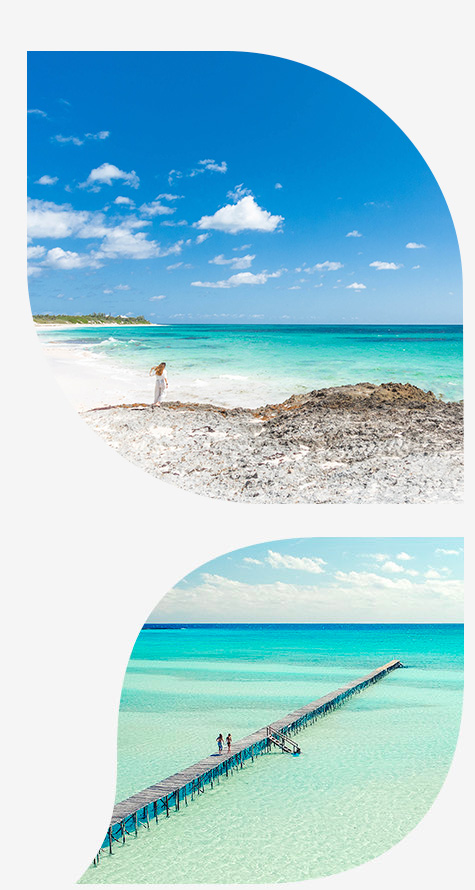
Tahiti Beach, Elbow Cay
A pale sandbar unfolds at low tide into warm, shallow water. Arrive by boat, golf cart plus a short walk, kayak or paddleboard; bring shade and check the tide.
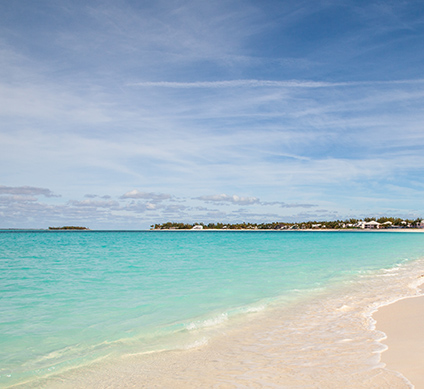
Treasure Cay Beach, Great Abaco
A long, softly curving mainland beach with luminous water. Public access and nearby services can change as redevelopment continues, so confirm locally.
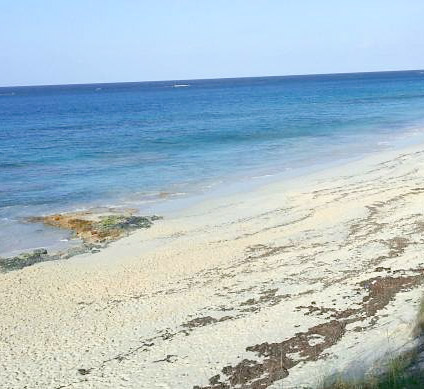
Great Guana Cay Beach
Miles of Atlantic-facing sand with reef color beyond the shallows. Beautiful for long walks; assess surf and current before swimming.
Gillam Bay, Green Turtle Cay
A quiet eastern beach with shallow, clear water and a castaway feel. Golf cart or bicycle makes the trip from New Plymouth easy.
Coco Bay, Green Turtle Cay
Calmer Sea of Abaco water, sunsets and turtle sightings make this a gentler counterpoint to the Atlantic side.
Sandy Cay, Pelican Cays
A boat-only national-park stop with a small beach and superb reef nearby. Use park moorings and never anchor on coral.
Winding Bay, Great Abaco
A graceful southeastern crescent near The Abaco Club. Shore access beyond the public beach should never be assumed through private club property.
The Atlantic beaches carry the greatest exposure
Checked July 29, 2026
Regional monitoring shows an exceptionally active 2026 sargassum season. In the Abacos, exposed east-facing Atlantic beaches—including stretches of Elbow Cay, Great Guana Cay, Green Turtle Cay and Great Abaco—are more vulnerable than the sheltered Sea of Abaco shore. Local wind, current and cleanup can create very different conditions on neighboring beaches.
The experiences people book first
The Abacos’ most worthwhile tours and day trips.
The strongest outings use local knowledge to connect cays, reefs, wildlife and maritime history while adapting the route to tide and weather.
Hope Town & Elbow Reef Lighthouse
Cross to Hope Town, climb the hand-wound lighthouse when open and explore the settlement’s lanes and Wyannie Malone Historical Museum at an unhurried pace.
Pelican Cays reef day
Use a licensed captain and park moorings for Sandy Cay Reef, then continue toward Little Harbour when weather and daylight cooperate.
Green Turtle Cay & Manjack Cay
Pair New Plymouth’s historic streets with a small-boat outing to quiet beaches, mangroves and turtle or ray habitat around Manjack. Wildlife sightings are never guaranteed.
Man-O-War Cay boatbuilding
Visit the settlement with a guide who can explain the cay’s boatbuilding traditions and recovery after Hurricane Dorian. Ask before photographing active workshops.
Little Harbour & Pete’s Pub
Sail or powerboat into protected Little Harbour for lunch and the Johnston family’s bronze-foundry story. Confirm the foundry and restaurant schedule first.
Private sailing day
Build a route around the day’s wind, tide and inlet conditions rather than a rigid list. Hope Town, Great Guana, Man-O-War and the Pelican Cays combine well from Marsh Harbour.
Bonefishing the flats
Fish shallow flats with a licensed local guide who understands tide, habitat and current regulations. Ask whether permits, tackle, lunch and transfers are included.
Outer-reef diving
Dive operators select walls, swim-throughs or protected reefs according to Atlantic swell and diver experience. Confirm equipment availability before arriving in the Abacos.
Abaco parrot & blue holes
Explore Great Abaco’s pine forest, blue-hole landscape and Bahama parrot habitat with a naturalist who knows current road and trail conditions.
Treasure Cay & northern Abaco
Combine the famous beach with northern settlements or a Green Turtle ferry connection. Verify public access, operating businesses and road conditions before setting out.
The defining experience
The Abacos make the most sense from a cockpit.
Protected water, short passages and settlement-to-settlement cruising make the Sea of Abaco one of the world’s most approachable charter grounds. Shallow banks, tide-sensitive entrances, open-Atlantic cuts and limited mooring fields still reward careful navigation.
Sailing the Abacos
Compare charter styles and bases, understand Sea of Abaco navigation, choose anchorages, provision in Marsh Harbour and build realistic seven- or ten-day routes.
Best charter base
Marsh Harbour: airport, supermarkets, fuel, repairs and the Moorings/Sunsail base are concentrated within a short transfer.
Typical route
Marsh Harbour → Great Guana → Green Turtle → Man-O-War → Hope Town → Pelican Cays → Little Harbour.
Primary skill
Reading water color, respecting charted depth and timing shallow approaches with tide and sun overhead.
Greatest constraint
Draft and daylight. Some routes, cuts and harbors are excluded by charter companies or unsuitable for deeper yachts.
On & under the water
Reefs outside. Quiet water inside.
Deep-sea fishing
The Abacos combine flats, reefs and serious Atlantic blue water. Charters from Marsh Harbour, Hope Town, Treasure Cay and Green Turtle Cay target wahoo, mahi-mahi, tuna, sailfish and marlin along the reef edge and offshore canyons. The run depends heavily on which cay you are staying on.
Best timing: Wahoo is a winter favorite, mahi becomes prominent in spring and tuna or billfish can reward longer warm-season trips. Weather across the exposed Atlantic cuts can cancel a charter even when the Sea of Abaco is calm.
Scuba & snorkeling
Pelican Cays Land and Sea Park and Fowl Cays National Park protect coral, seagrass and rocky-shore habitat. Sandy Cay Reef, Mermaid Reef near Marsh Harbour and outer-reef sites offer turtles, rays, grouper and tropical fish. Ocean cuts and reef sites require suitable conditions and a local operator; coral health varies after storms, heat stress and disease.
Surfing
Garbanzo on Elbow Cay is the best-known break: an Atlantic reef wave favored by northeast swell and offshore west-to-northwest wind. Winter offers the best odds. Coral, urchins and current make it an intermediate-or-better prospect, not a casual swim-out lesson.
Fishing
Bonefish flats, reef fishing and deep-water pelagic grounds sit remarkably close together. Foreign visitors need the appropriate permit and must follow current seasons, bag limits and protected-area rules. Use a licensed guide.
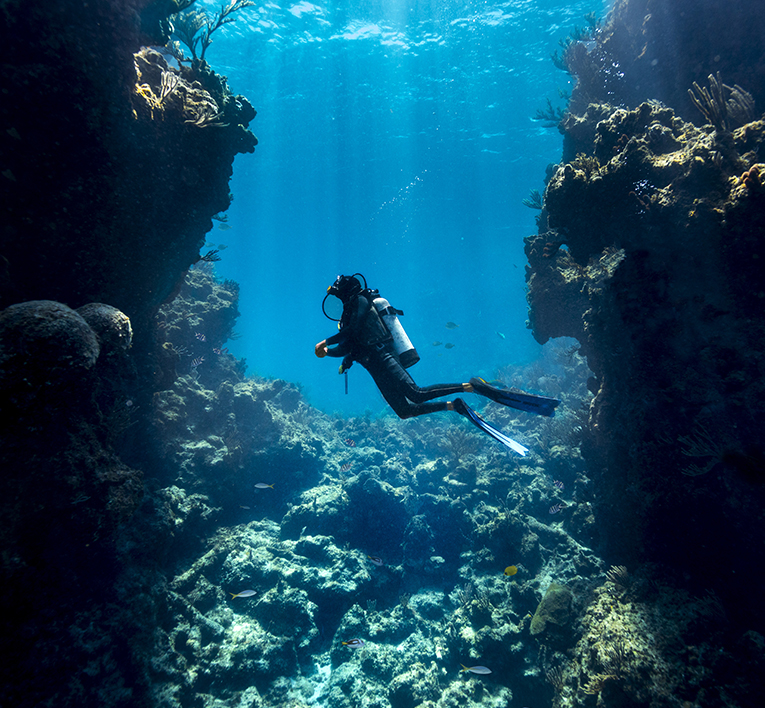
The shallow Sea of Abaco gives way to reef walls, swim-throughs and Atlantic depth. Conditions decide which sites are safely accessible.
The Bahamas Ministry of Tourism · official destination mediaCulture, nature & excursions
The boats carry more than visitors.
Culture
Bahamian identity is expressed through Junkanoo, rake-and-scrape, church, food, family and long maritime traditions. Hope Town and New Plymouth preserve Loyalist-era architecture within the broader histories of African-Bahamian people and the Lucayans who came before European settlement.
Man-O-War Cay’s wooden-boat tradition remains a particularly tangible expression of Abaco skill. Visit respectfully and remember that each settlement is a small, lived-in community.
Nature & hiking
Abaco National Park protects nesting habitat for the Bahama parrot, one of the few parrots known to nest in limestone cavities in the ground. Pine forest, blue holes, mangroves and national-park reefs reward guided exploration. Trails can be rough or unsigned; heat, insects and storm damage make local advice useful.
Hope Town & lighthouse
Climb the landmark, walk the village lanes and visit the Wyannie Malone Historical Museum when open.
Pelican Cays boat day
Snorkel from a proper park mooring, stop at Sandy Cay and continue to Pete’s Pub in Little Harbour.
Man-O-War boatbuilding
Learn how dinghies and larger boats shaped island livelihoods; ask before photographing active workshops.
Green Turtle & Manjack
Pair New Plymouth’s lanes with a quiet beach, mangroves or a guided turtle-and-ray excursion.

Generations of Abaconians have shaped wood into dinghies, workboats and family livelihoods. The craft is history that still smells of sawdust.
The Bahamas Ministry of Tourism · official destination mediaThe annual calendar
Two events that belong to the Abacos.
Exact dates and host cays can shift, especially for regattas. Confirm the current program before booking a boat or a villa.
Usually late June · multiple cays
Regattas in The Abacos
Island-to-island racing, shore parties and local hospitality connect Marsh Harbour, Hope Town, Great Guana, Green Turtle and other host communities.New Year’s Day · Green Turtle Cay
New Plymouth Junkanoo
Costumes, goatskin drums, cowbells, horns and dancing carry Bahamian tradition through the narrow streets of New Plymouth.Restaurants & hotels
Conch, dock sunsets and small-island timing.
Abaco Inn, Firefly Bar & Grill, Hope Town Inn & Marina and small village kitchens—confirm current opening days
Grabbers, Nipper’s and seasonal marina dining; expect a livelier afternoon atmosphere when boats arrive
Green Turtle Club, Bluff House, Pineapples and New Plymouth cafés and takeaways
Wally’s, marina dining and Bahamian takeaways; the broadest choice and the easiest place to provision
Pete’s Pub for grilled fish, art-foundry character and a memorable sail-in lunch
Conch salad, cracked conch, grilled grouper, peas and rice, baked macaroni, johnnycake and guava duff
Practical details
The useful things to know before you go.
Bahamian English and local expressions shape everyday conversation.
BSD is fixed at parity with the U.S. dollar. U.S. cash is accepted throughout the islands.
Cards work at larger businesses. Carry cash for ferries, taxis, small shops, tips and outages.
North American plugs fit the standard outlets.
Rainwater and desalinated supplies are common. Filtered or bottled water is the conservative choice.
Great Abaco uses cars; the smaller cays rely on golf carts, walking, bicycles and boats.
Transportation
Pre-arrange airport taxis, learn which ferry terminal your boat uses and reserve golf carts during busy weeks. Avoid scheduling a tight flight immediately after the last ferry of the day.
Entry basics
Entry rules depend on nationality and arrival method. Private vessels must complete current Bahamas customs and immigration procedures and carry the appropriate cruising permit. Reconfirm requirements before departure.
Safety
The Abacos generally feel quieter than Nassau, but theft, boating accidents, road hazards and isolated beaches still warrant normal caution. Lock accommodations and dinghies, secure valuables and stay clear of marked boat channels while swimming.
Health & vaccines
Routine vaccines should be current. Mosquito protection, strong sun protection and travel medical insurance matter. Divers should confirm the location and operating status of the nearest recompression support before diving.
Ferry schedules, customs procedures, charter restrictions, park access and business hours change. Reconfirm details with official sources and your providers before travel.
Research desk
Official sources & live checks
Ferry schedules, businesses, park access, customs fees and post-storm conditions change. Start here, then confirm directly before travel.