Find your bearings
Two islands. Two completely different rhythms.
Antigua holds the international airport, capital, major resorts and historic harbours. Barbuda sits roughly forty miles to the north, with a tiny population, vast beaches and far fewer services. Treat it as a separate journey.
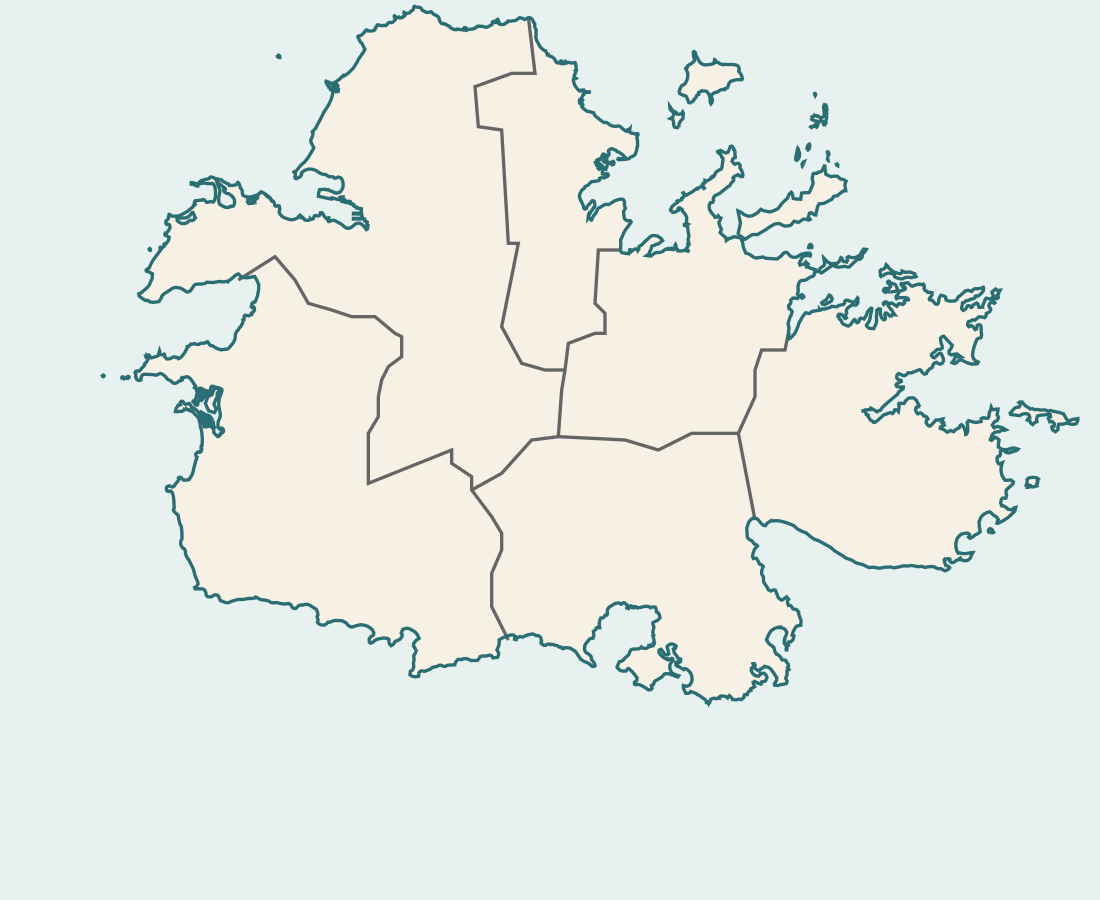 AntiguaCaribbean SeaAtlantic OceanV.C. Bird AirportANUSt. John’sCapital · ferry & cruise portJolly BeachWest coastHalf Moon BayAtlantic coastNelson’s DockyardEnglish Harbour
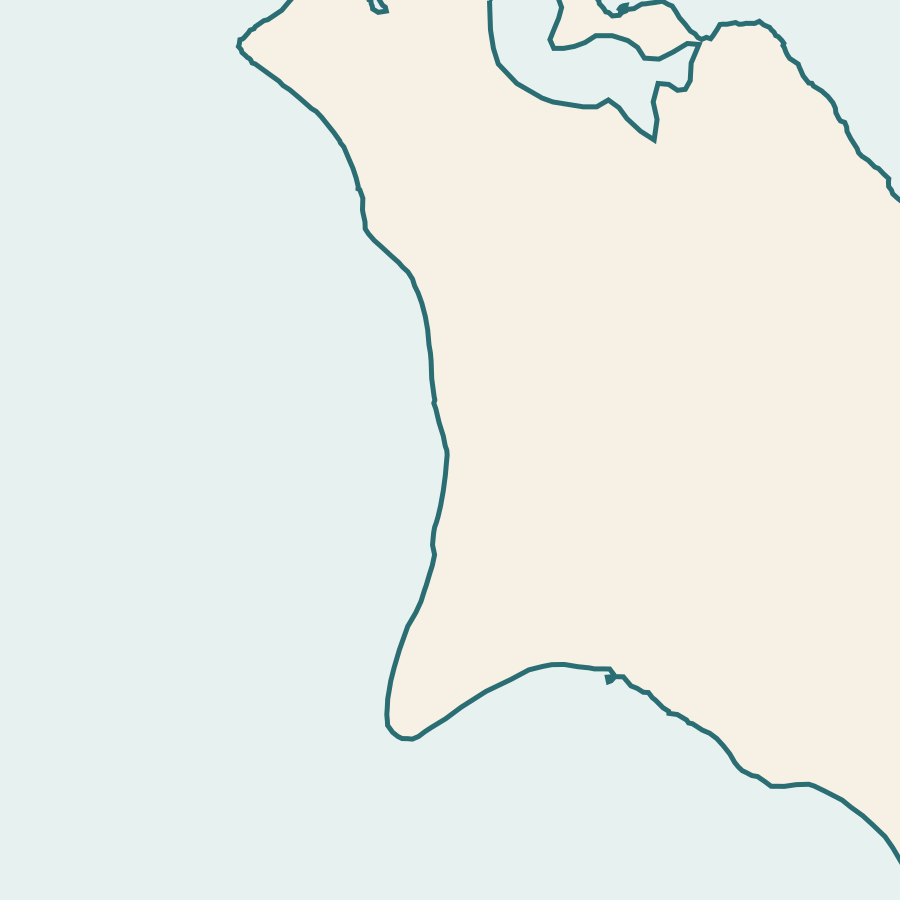 BarbudaCodrington · BBQVillage & airportLow BayPink-sand coast
The airport, easiest resort base, cruise port and broadest dining choice.
Nelson’s Dockyard, yacht culture, history and atmospheric evenings.
Codrington Lagoon, enormous pink-tinged beaches and true seclusion.
Know the islands
One country. Two beautifully different escapes.
Antigua brings coves, yacht harbours, villages and a sophisticated resort scene. Barbuda, roughly 30 miles north, is flatter, quieter and edged by seemingly endless pink-tinged sand. Together they offer one of the Caribbean’s most rewarding contrasts.
A brief history
Indigenous communities lived here for millennia before Columbus sighted Antigua in 1493. Britain settled Antigua in 1632 and later controlled Barbuda through the Codrington family. The colonial sugar economy depended on enslaved African labor; emancipation came in 1834.
Antigua and Barbuda became independent on November 1, 1981. Nelson’s Dockyard, now a UNESCO World Heritage site, preserves Georgian naval architecture while also telling the essential story of the enslaved Africans whose labor sustained it.
What they are most known for
“365 beaches,” world-class sailing, Nelson’s Dockyard, Shirley Heights sunsets, Antigua Carnival, sophisticated hideaway hotels and Barbuda’s pink-sand coast and magnificent frigatebird colony.
Geography
Antigua covers about 108 square miles, with a dry limestone north and volcanic hills in the southwest; Boggy Peak rises to 1,319 feet. Barbuda is a very flat coral-limestone island shaped by Codrington Lagoon. Uninhabited Redonda, far to the southwest, is a protected ecological reserve.
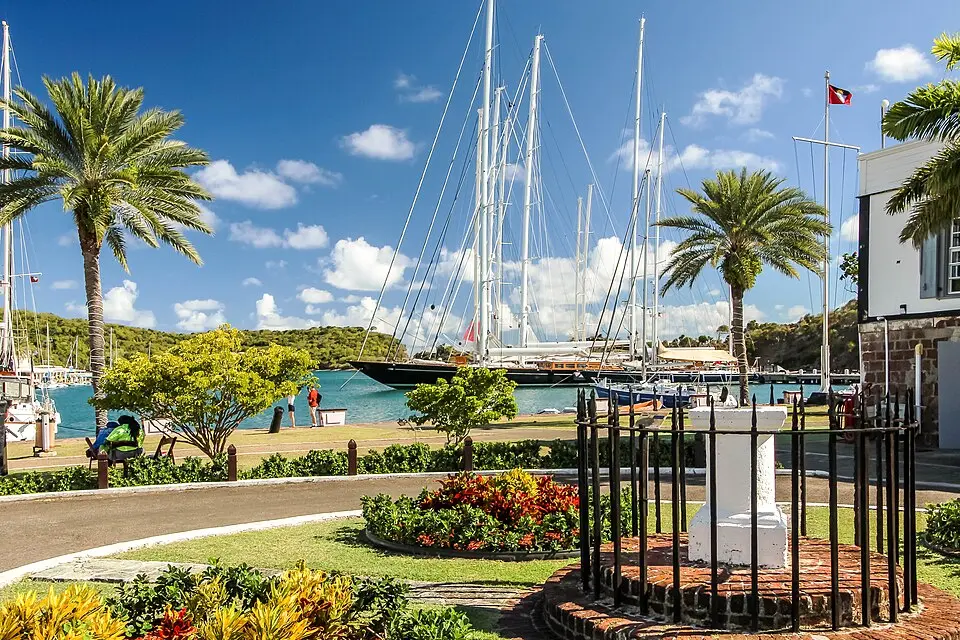
Nelson’s Dockyard is not a sealed-off monument. Restored naval buildings now sit beside working marinas, gardens and cafés, making the UNESCO site feel most compelling when its architecture and difficult labor history are considered together.
Dr. Thomas Liptak · Wikimedia Commons · CC BY 4.0Plan your trip
Trade-wind winters. Warm, quieter shoulders.
December–April
Drier air, dependable breezes and the liveliest sailing season—with peak demand and prices.
May–June
Warm seas, fewer crowds and appealing rates after Sailing Week, though showers and humidity rise.
November
A quieter pre-peak window once seasonal hotels reopen; hurricane season officially runs through November 30.
Are Antigua & Barbuda hurricane-safe?
No Caribbean island is hurricane-safe. The Atlantic season runs June 1–November 30, with the greatest historical threat from August through October. Hurricane Irma devastated Barbuda in 2017, underscoring its exposure. For summer or autumn travel, choose flexible reservations, comprehensive storm coverage and a clear evacuation plan.
Arrivals & island hopping
How to get to Antigua & Barbuda.
Nearly all international visitors enter through Antigua, then continue to their resort or connect onward to Barbuda. Antigua is the practical gateway; Barbuda is the beautiful extra step that rewards a little advance planning.
Fly into Antigua
V.C. Bird International Airport (ANU) receives nonstop flights from major North American and British gateways plus regional Caribbean service. Taxis and prearranged transfers are the normal way to reach hotels; drive time ranges from roughly 15 minutes in the north to 35–45 minutes for the south and English Harbour.
Check whether your airline includes departure tax and review the optional digital arrival process before travel.
Ferry or short regional flight
From Antigua, reach Barbuda by scheduled passenger ferry or a short flight. The ferry is more economical and carries more luggage; flying is faster and often smoother for travelers prone to seasickness. Arrange a taxi or rental transfer on Barbuda before arrival because services are limited.
Spend at least two nights when possible.
Antigua ↔ Barbuda
Antigua → Barbuda
Sea Bridge Ferries and the Barbuda Express operate scheduled passenger service between the islands, generally taking about 90 minutes. Sailings currently run throughout the week, but departure times vary by day and can change for weather, maintenance and holidays.
- Typical pattern: early departure from Antigua with an afternoon return from Barbuda; some sailings support overnight stays.
- Book ahead: reserve directly and reconfirm the departure pier; schedules may list St. John’s or Jolly Harbour, while cargo operations may use Crabbs.
- Day trip tip: package the ferry with a local taxi or lagoon guide so transport is waiting when you arrive.
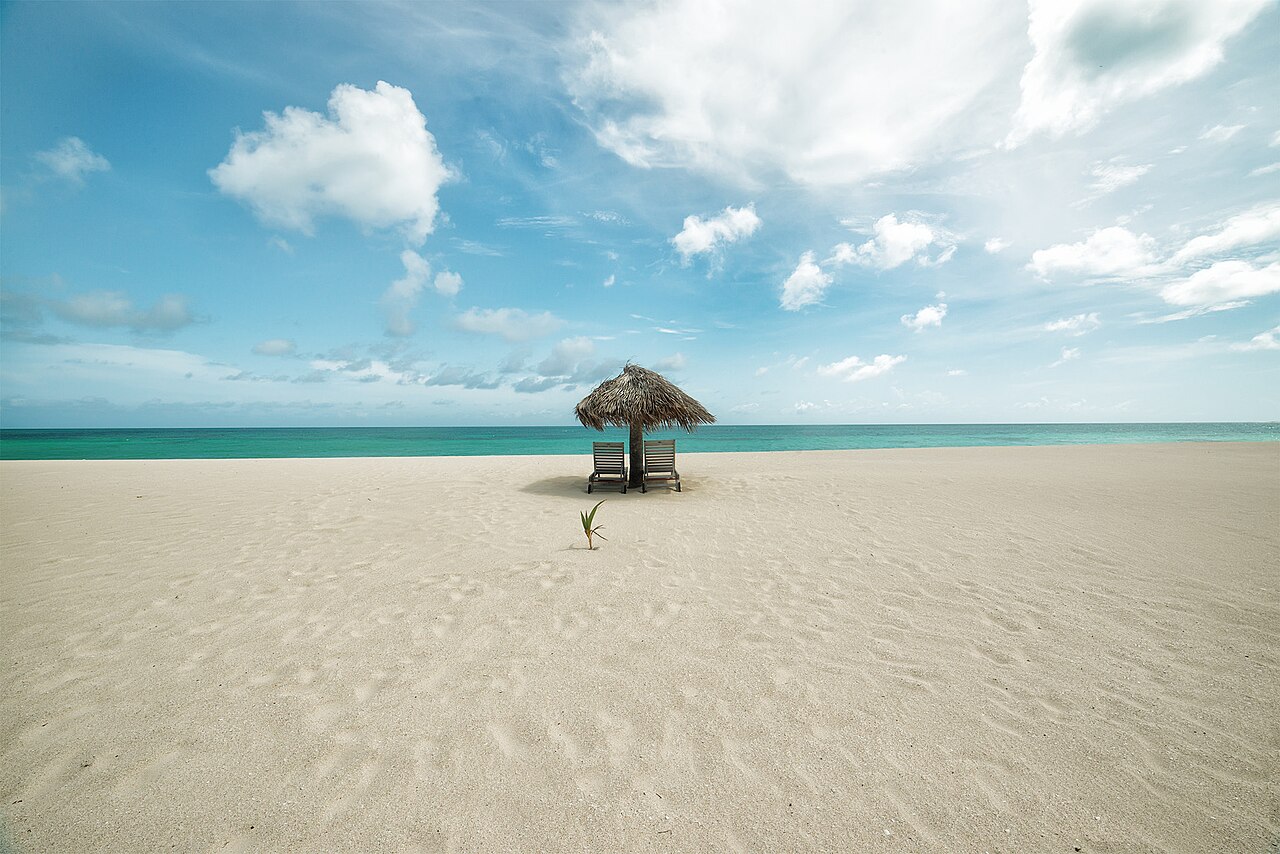
The island’s long, lightly developed shoreline feels entirely removed from Antigua’s resort corridors. Arrange transport and meals before arrival, then leave enough time for the beach to be the plan.
Yan Renucci · Wikimedia Commons · CC BY 3.0Choose your rhythm
Where to stay in Antigua & Barbuda
The northwest is easiest, the west is dreamiest, English Harbour has the most character after dark, and the east feels removed. Barbuda deserves its own stay and requires more careful transport planning.
Best for first visits, families & easy resort days
Northwest & Dickenson Bay
The most convenient beach-and-resort base, close to the airport, St. John’s, calm water, restaurants and watersports. It is effortless, but busier and less secluded on cruise-ship days.
- Nearby
- Dickenson Bay, Runaway Bay, Fort James & Deep Bay
- Consider
- Blue Waters, Royalton CHIC, Sandals Grande Antigua, Siboney Beach Club & Hodges Bay
Best for beaches, romance & sunsets
West & Southwest Coast
Antigua’s classic leeward beauty: long ribbons of pale sand, calmer water and romantic hillside resorts. Restaurants and sights are spread out, so a rental car or planned taxis help.
- Nearby
- Jolly, Valley Church, Ffryes, Darkwood, Turners & Carlisle Bay
- Consider
- Hermitage Bay, COCOS, Keyonna Beach, Tamarind Hills, Curtain Bluff & Carlisle Bay
Best for sailing, history & dining
English & Falmouth Harbours
A walkable pocket of marinas, restored Georgian buildings, yacht culture and excellent evenings. The atmosphere peaks during sailing season; the trade-off is fewer broad, calm resort beaches at your door.
- Nearby
- Pigeon Point, Galleon Beach & Rendezvous Bay by hike or boat
- Consider
- The Inn at English Harbour, Admiral’s Inn, South Point, Copper and Lumber Store & Catamaran Hotel
Best for quiet resorts, breeze & watersports
East Coast & Long Bay
A tranquil, less-developed side of Antigua with reef-protected coves and strong trade winds. It suits travelers who enjoy staying put, but it is farther from nightlife and more exposed to Atlantic swell and sargassum.
- Nearby
- Long Bay, Half Moon Bay, Nonsuch Bay & Green Island
- Consider
- Hammock Cove, The Verandah, Pineapple Beach Club & Nonsuch Bay Resort
Best for profound seclusion & nature
Barbuda
Choose Barbuda for pink-tinged sand, the Codrington Lagoon and an entirely slower scale. Limited services, weather-dependent transport and higher prices demand planning, but the sense of space is extraordinary.
- Nearby
- Princess Diana Beach, Pink Sand Beach, 17-Mile Beach & Low Bay
- Consider
- Barbuda Belle, Barbuda Cottages, intimate guesthouses and private-island-style resorts
A coastline made of coves
The beaches worth building a day around.
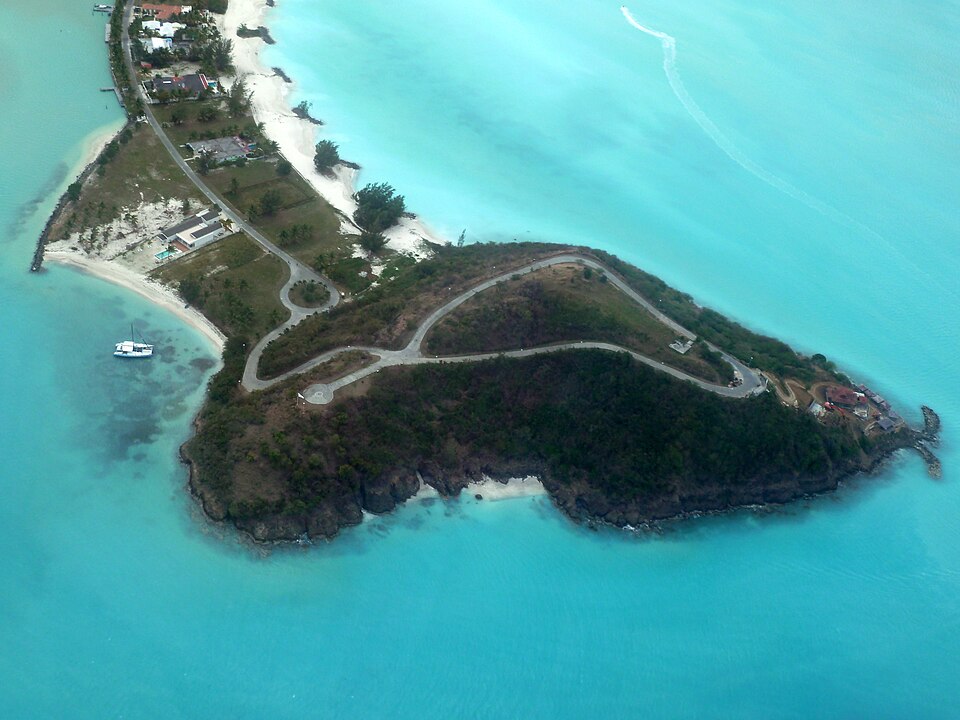
Jolly Beach
A mile-long sweep of powder-soft sand and luminous west-coast water, with enough space to find a quieter stretch beyond the resort zone.
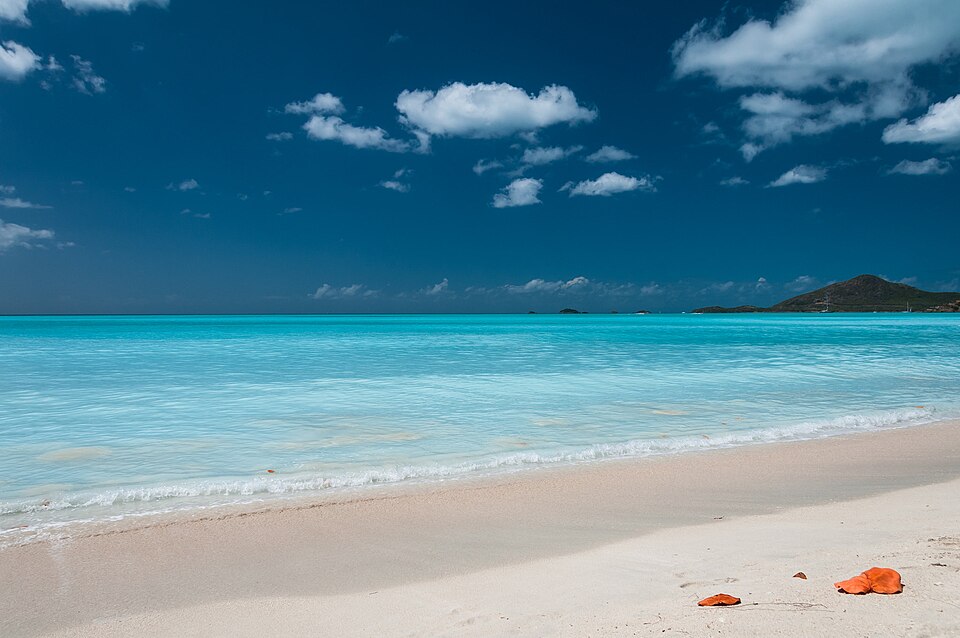
Valley Church Beach
Calm turquoise water, a beach bar and an easygoing setting. Beautiful but popular when cruise excursions arrive.
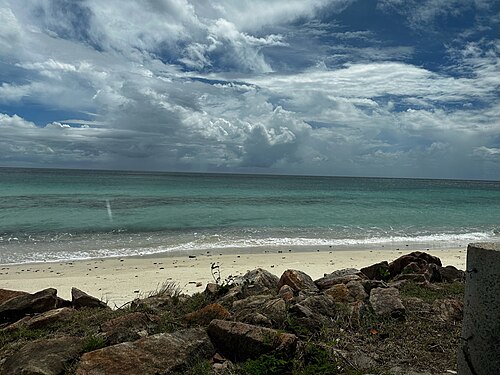
Darkwood Beach
Clear water, Montserrat views on a bright day and a less-developed feel between the island’s busier west-coast beaches.
Half Moon Bay
A dramatic Atlantic crescent with rolling surf and wild beauty. Swim only when conditions suit your ability; the calmer end can offer snorkeling.
Princess Diana Beach, Barbuda
Miles of pale, shell-tinted sand and luminous shallows with very little development. Arrange transport before arrival and bring what you need for the day.
Pigeon Point Beach
Shady sea-grape trees, gentle water and a local family atmosphere minutes from English Harbour.
Long Bay
Fine pale sand and a reef-sheltered swimming area on calm days, with snorkeling around the rocky and reef edges.
Rendezvous Bay
A secluded south-coast reward reached by hike, 4x4 or boat. Bring water and supplies, and arrange your return before setting out.
Active season; beach conditions vary
Checked July 26, 2026
Regional monitors show an active 2026 Caribbean season and a mild-to-moderate July subregional outlook. Antigua’s east and northeast shores—including exposed parts of Long Bay, Half Moon Bay and the Nonsuch side—usually receive more wind-driven sargassum. West and southwest beaches such as Jolly, Ffryes, Darkwood and Turners are often better fallbacks. Barbuda’s windward shore can also collect seaweed.
The experiences people book first
Antigua & Barbuda’s most popular tours.
The best outings reveal a different coastline, add context to the historic harbours or make the journey to Barbuda feel intentional.
Antigua circumnavigation
Circle the island by powerboat or fast catamaran, with weather-dependent stops around Green Island, the North Sound, Nelson’s Dockyard and a sheltered snorkeling cove.
Nelson’s Dockyard & Shirley Heights
Explore the UNESCO-listed dockyard with a knowledgeable guide, then climb through the harbour landscape or continue by road to Shirley Heights for the classic overlook.
Barbuda pink-sand day
Travel by ferry, plane or small boat for the pink-sand coast, Codrington Lagoon and a locally guided look at Barbuda. A two-night stay is better when time allows.
Stingray City & Laviscount Island
Take a short boat ride to a shallow sandbar encounter, then add reef snorkeling or the giant tortoises on Laviscount Island. Choose an operator that keeps animal handling restrained.
Cades Reef snorkel sail
Sail the leeward coast for a guided snorkel at Cades Reef or another site chosen for the day’s visibility, current and swell, usually with lunch and a quieter swim stop.
Betty’s Hope & island culture
Pair the restored sugar-estate site with a village lunch, local produce, black pineapple and stories that place Antigua’s beaches within its much deeper history.
On & under the water
Serious sailing, approachable reefs and Atlantic swell.
Deep-sea fishing
Antigua supports established sport-fishing charters from Jolly Harbour, Falmouth Harbour and the English Harbour area. Offshore trolling can produce wahoo, mahi-mahi, yellowfin or blackfin tuna, kingfish and blue or white marlin. Barbuda has far fewer visitor-oriented boats, so arrange the trip from Antigua unless a local captain is confirmed.
Best timing: Wahoo is commonly associated with winter, mahi with late winter and spring, and billfish with the warmer part of the year. Antigua’s Atlantic side can be rough even when the beaches look calm.
Sailing Antigua & Barbuda
Nelson’s Dockyard charter bases, anchorages, provisioning, clearance, the Barbuda passage and realistic seven- or ten-night routes.
Scuba & snorkeling
Antigua offers easy reef and wreck outings. Coral health is mixed and site-specific after heat stress, storms and disease, so choose a conservation-minded operator that adjusts the site to current visibility and reef condition.
- Signature dives: Cades Reef, Sunken Rock, Monk’s Head, the Pillars of Hercules and the Andes wreck in Deep Bay.
- Snorkel: Long Bay, Galleon Beach and the Pillars, Deep Bay, Green Island and guided trips to Cades Reef.
- Animal life: turtles, rays, barracuda, morays, lobster, reef fish and occasional nurse sharks.
- Reef care: use reef-safer sun protection, secure equipment and never stand on or touch coral.
Surfing & wind sports
Surf is inconsistent and more technical than the postcard beaches suggest. Half Moon Bay and other east- or northeast-facing breaks can work with Atlantic swell, but reefs, currents and changing access reward local advice. Jabberwock is the island’s best-known wind- and kitesurfing beach; Green Island and Nonsuch Bay also suit wind sports with an experienced operator.
Culture & land
Harbour stories, hilltop views and living traditions.
Culture
English is official, while Antiguan and Barbudan Creole carries everyday warmth and wit. Carnival fills late July and early August with mas, steelpan, calypso and soca. Cricket is a passion; food traditions include fungi and pepperpot, ducana with saltfish, fresh seafood and unusually sweet Antigua black pineapple. Barbuda’s communal-land tradition and conservation culture are central to its identity.
Hiking
Walk the Lookout Trail or Middle Ground above English Harbour, continue toward Shirley Heights, or take the Carpenter Rock route for a more rugged coast. Wallings Nature Reserve leads toward Signal Hill; Boggy Peak is best attempted with a guide. The trail to Rendezvous Bay ends with a swim-worthy reward. Start early, carry ample water and avoid exposed ridges in midday heat.
The annual calendar
Five events worth shaping an Antigua and Barbuda trip around.
This is one of the Caribbean’s strongest event calendars for sailors, while Caribana and Carnival add two very different celebrations of local culture. Dates can shift; confirm the current schedule before arranging flights, ferries or a charter.
Usually February · Starts and finishes in Antigua
RORC Caribbean 600
A demanding offshore race weaving around Caribbean islands, with English Harbour serving as its atmospheric base.Usually April · English Harbour
Antigua Classic Yacht Regatta
Graceful traditional yachts, spirited racing and dockside events in one of the Caribbean’s most beautiful sailing settings.Late April–early May · Antigua
Antigua Sailing Week
World-class racing, harbour celebrations and beach events during the island’s internationally known sailing festival.Late May–early June · Barbuda
Barbuda Caribana
A relaxed Whitsuntide celebration of Barbudan music, food, pageantry, sport and community life.Late July–early August · Primarily Antigua
Antigua Carnival
Mas, steelpan, calypso, soca, fêtes and colorful street parades during the country’s largest annual celebration.Eat & sleep well
From harbour tables to roadside kitchens.
Antigua’s dining scene is strongest around English Harbour, the west coast and resort corridors. Reserve destination restaurants and Sunday sunset tables early in high season. On Barbuda, plan meals with your lodging or guide before arrival.
Sheer Rocks, Rokuni, Le Bistro, Weatherills Rekindled or The Cove
Catherine’s Café, Colibri, Pillars at Admiral’s Inn, Boom or Cloggy’s
Cecilia’s High Point Café, Ana’s on the Beach or a west-coast beach-bar lunch
Papa Zouk, Roti King, Hemingway’s and roadside stops for pepperpot, fungi, ducana and black pineapple
Hotel shortlist
Serene & romantic
Hermitage Bay for secluded luxury; Keyonna Beach or COCOS for adults-only west-coast calm; Barbuda Belle for a remote nature-led stay.
Full-service luxury
Jumby Bay Island, Blue Waters, Curtain Bluff, Carlisle Bay and Hammock Cove pair attentive service with distinct settings.
Families & easygoing stays
The Verandah, Pineapple Beach Club, Jolly Beach Antigua, Royalton Antigua and villa-style stays around Jolly Harbour offer broader flexibility.
Before you go
The practical details.
English is official; Antiguan and Barbudan Creole is widely spoken.
The East Caribbean dollar is fixed at EC$2.70 to US$1; U.S. dollars are widely accepted.
Cards are common on Antigua. Carry cash for taxis, small vendors and especially Barbuda.
Some properties offer other voltages. Check labels and your hotel; 110V-only devices need a converter.
Supply may combine desalinated, stored and cistern water. Filtered or bottled water is the cautious choice.
Renters generally need a temporary local permit; roads can be narrow, dark and poorly signed.
Transportation
V.C. Bird International Airport is in northeast Antigua. Taxis are practical for resort transfers, while public minibuses radiate from St. John’s on limited routes. Rent a car for beaches, restaurants and independent exploring. Reach Barbuda by small plane or the roughly 90-minute ferry; schedules and sea conditions change, so confirm both directions before leaving Antigua.
Safety
Antigua and Barbuda currently carries a U.S. Level 1 “exercise normal precautions” advisory. Secure valuables, avoid isolated beaches after dark, use licensed transport and take extra care on unfamiliar roads. Sun, dehydration, rough water and hurricane disruption are meaningful visitor risks.
Health & vaccines
Keep routine vaccines current. CDC recommends hepatitis A, hepatitis B and typhoid for many travelers. Prevent mosquito bites because dengue and Zika can occur. Yellow-fever vaccination is not recommended for the destination itself, but proof may be required when arriving from a risk country, including certain long airport transits. Review your itinerary with a clinician.
Entry basics
Entry rules depend on nationality. U.S. travelers currently need a valid passport and onward or return arrangements. Airlines and ferry operators may require additional forms or earlier check-in, so confirm the current rules before travel.
Entry rules, prices, schedules, health advice, weather and sea conditions can change. Reconfirm details with official sources and your providers before booking or departing.
Research desk
Official sources & live checks
Ferry schedules, yacht procedures, health guidance and sargassum can change quickly. Use these links for the final checks close to departure.