Know the island
The border is invisible. The personalities are not.
The northern French collectivity of Saint-Martin and the southern Dutch country of Sint Maarten share roads, beaches, labor and family life without a routine land-border checkpoint. Travelers move freely around the island, but immigration, currency, electrical systems and maritime clearance still belong to two separate jurisdictions.
A brief history
Indigenous communities, including Arawakan peoples and later Kalinago, knew the island long before European claims. Columbus named it in 1493, but sustained French and Dutch settlement came in the 1600s. The 1648 Treaty of Concordia formalized a division that survives today.
Salt, sugar and cotton were produced through the forced labor of enslaved Africans. France abolished slavery in 1848; emancipation on the Dutch side followed in 1863. Tourism and aviation replaced salt as the modern economic engines. Hurricane Irma devastated both sides in 2017, and rebuilding continues to shape the coastline.
What it is most known for
Thirty-seven beaches, Grand Case dining, Maho’s low-flying aircraft, Orient Bay, duty-free shopping, the vast Simpson Bay Lagoon, a multilingual population and unusually easy access to Anguilla, St. Barts, Saba and Statia.
Geography
The roughly 37-square-mile island is mountainous in the center and deeply indented by bays, salt ponds and the shared lagoon. French Saint-Martin occupies the larger north; Dutch Sint Maarten the denser south. Pic Paradis rises to about 424 meters, while Tintamarre, Pinel, Green Cay and Creole Rock sit offshore in the French nature reserve.
Choose your rhythm
Stay French for atmosphere. Stay Dutch for convenience. Cross the line often.
Food, villages & quieter evenings
Grand Case, Orient Bay, Marigot and the small coves feel more European-Caribbean. This side rewards long lunches, bakeries, villas and beach days that end without a casino soundtrack.
Flights, nightlife & easier logistics
SXM airport, Simpson Bay marinas, major supermarkets, resorts, casinos and a broader late-night restaurant scene make the south simpler for short trips and sailors.
Grand Case or Orient Bay · 5–8 nights
Base on the French side if food and beach atmosphere matter most, rent a car and devote at least two days to the Dutch side and south-coast boat trips.
Four nights French + three Dutch
Pair Grand Case or Orient Bay with Simpson Bay, Maho or Cupecoy. The split creates two distinct vacations and simplifies an early SXM departure.
When to go
December through April offers the most dependable beach weather.
December–April
Drier air, lower humidity, active ferry schedules and the island’s fullest restaurant and sailing season. Reserve cars and Grand Case dinners early.
May–June
Warm water, fewer crowds and softer hotel rates. Rain and sargassum risk rise, but this is often the smartest shoulder-season window.
July–November
Hotter, wetter and storm exposed. Some restaurants close, ferry schedules thin and tropical systems can disrupt the entire region. Festival dates can be worthwhile exceptions.
Is the island hurricane-safe?
No. Saint Martin sits squarely in the Atlantic hurricane belt. Hurricane season runs June through November, with the greatest historical risk from August into October. Irma’s 2017 damage is the blunt reminder. Use flexible bookings, strong travel insurance and the hotel’s evacuation plan.
How to get there
SXM is the gateway; ferries turn the island into a regional hub.
Princess Juliana · SXM
The Dutch-side airport handles the island’s long-haul and major regional service. Traffic can make a short map distance surprisingly slow; allow generous time for the airport and ferries.
Grand Case–Espérance · SFG
Small regional aircraft connect the French side with Guadeloupe, Martinique, St. Barts and nearby gateways. It is convenient for Grand Case and Orient Bay but is not the primary international airport.
Marigot ↔ Blowing Point
The public passenger ferry is the most dependable scheduled international link, usually taking about 20–30 minutes. Dutch-side airport ferries and private boats also operate. Carry your passport and budget for departure, port and taxi charges.
Several ferry gateways
Operators use Marigot, Oyster Pond and Philipsburg depending on company, season and sea conditions. Crossings are often 45–75 minutes and can be rough. Check the exact terminal before arranging your taxi.
Makana regional ferry
Makana links the Dutch side with Saba, St. Eustatius and St. Kitts on selected days. It is a real island-hopping route, not a daily commuter service; build a weather buffer into the return.
Cul-de-Sac shuttle ferry
Small local boats make the short daylight crossing to Pinel. This is a beach shuttle, not an international ferry; times and final departures change with season and weather.
Where to stay
Match the base to the evenings you want.
Traffic through Cole Bay, Simpson Bay and Marigot can turn dinner into an expedition. Walkability matters more here than the island’s compact size suggests.
Best overall for food, sunsets & village atmosphere
Grand Case · French side
A slim waterfront village with exceptional restaurants, casual lolos and a calm bay. It is the island’s most rewarding evening base, though parking is tight and the beach is narrower than Orient Bay.
- Nearby
- Grand Case Beach, Creole Rock trips, restaurant row, Lolos
- Consider
- Le Petit Hotel, Grand Case Beach Club, L’Esplanade
Best for a full-service beach vacation
Orient Bay · French side
The island’s longest concentration of beach clubs, watersports, restaurants and walkable lodging. It is sociable and energetic; swell and sargassum vary by day.
- Nearby
- Orient Beach, village square, Pinel Island, Green Cay
- Consider
- La Playa, Orient Beach Hotel, Esmeralda Resort, boutique rentals
Best for villas, privacy & leeward beaches
Terres Basses & Baie Nettlé · French side
The low-key western peninsula puts Baie Rouge, Plum Bay and Long Bay close by. Terres Basses is villa country; Baie Nettlé adds apartments and lagoon access. A car is essential.
- Nearby
- Baie Rouge, Plum Bay, Long Bay, Marigot, Mullet Bay
- Consider
- La Samanna, Hommage Hotel, private villas and residences
Best for a protected cove & quiet resort rhythm
Anse Marcel · French side
A steep road drops into a sheltered marina-and-beach enclave. The bay is calm and refined, but dining variety is limited and nearly every island outing begins with the hill back out.
- Nearby
- Anse Marcel Beach, marina, Petites Cayes trail, Grand Case
- Consider
- Secrets St. Martin, boutique apartments and villas
Best for convenience, sailing & restaurant variety
Simpson Bay · Dutch side
The practical all-rounder sits near SXM airport, the lagoon, marinas, supermarkets and a deep restaurant bench. Traffic and nightlife reduce the sense of escape, but logistics are hard to beat.
- Nearby
- Simpson Bay Beach, lagoon, marinas, airport, Pelican Key
- Consider
- Mary’s Boon, The Villas at Simpson Bay, Atrium, Commodore Suites
Best for nightlife, resorts & west-coast sunsets
Maho & Cupecoy · Dutch side
Maho places plane spotting, casinos and nightlife outside the hotel. Cupecoy feels more residential and upscale, with cliff-backed coves and easy access to Mullet Bay. Expect aircraft noise and busy roads.
- Nearby
- Maho Beach, Mullet Bay, Cupecoy coves, Porto Cupecoy
- Consider
- The Morgan, Sonesta Maho Beach, Sapphire, condo resorts
Best for shopping, cruise access & a short stay
Philipsburg & Great Bay · Dutch side
Front Street, the boardwalk and Great Bay are walkable, historic and lively on ship days. Evenings become quieter; serious beach travelers usually prefer another base.
- Nearby
- Great Bay, Front Street, Fort Amsterdam, ferry terminals
- Consider
- Holland House, Divi Little Bay, Belair Beach Hotel
Best for sunrise views & a quieter eastern edge
Dawn Beach & Oyster Pond
A scenic but exposed corner near the French–Dutch line. It works for resort time and St. Barts ferry access when service operates, but wind, rough water and sargassum can be significant.
- Nearby
- Dawn Beach, Oyster Pond, Orient Bay, Philipsburg
- Consider
- JW Marriott St. Maarten, Oyster Bay Beach Resort, villas
Thirty-seven beaches, very different personalities
Leeward bays for calm water. Eastern shores for space, wind and waves.
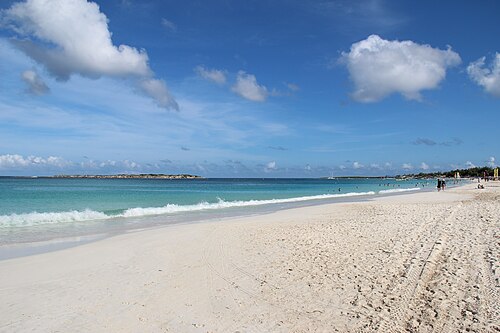
Orient Bay · French
Long, pale and energetic, with beach clubs, watersports and plenty of room. The southern end retains a clothing-optional tradition. Trade-wind chop and sargassum are the main variables.
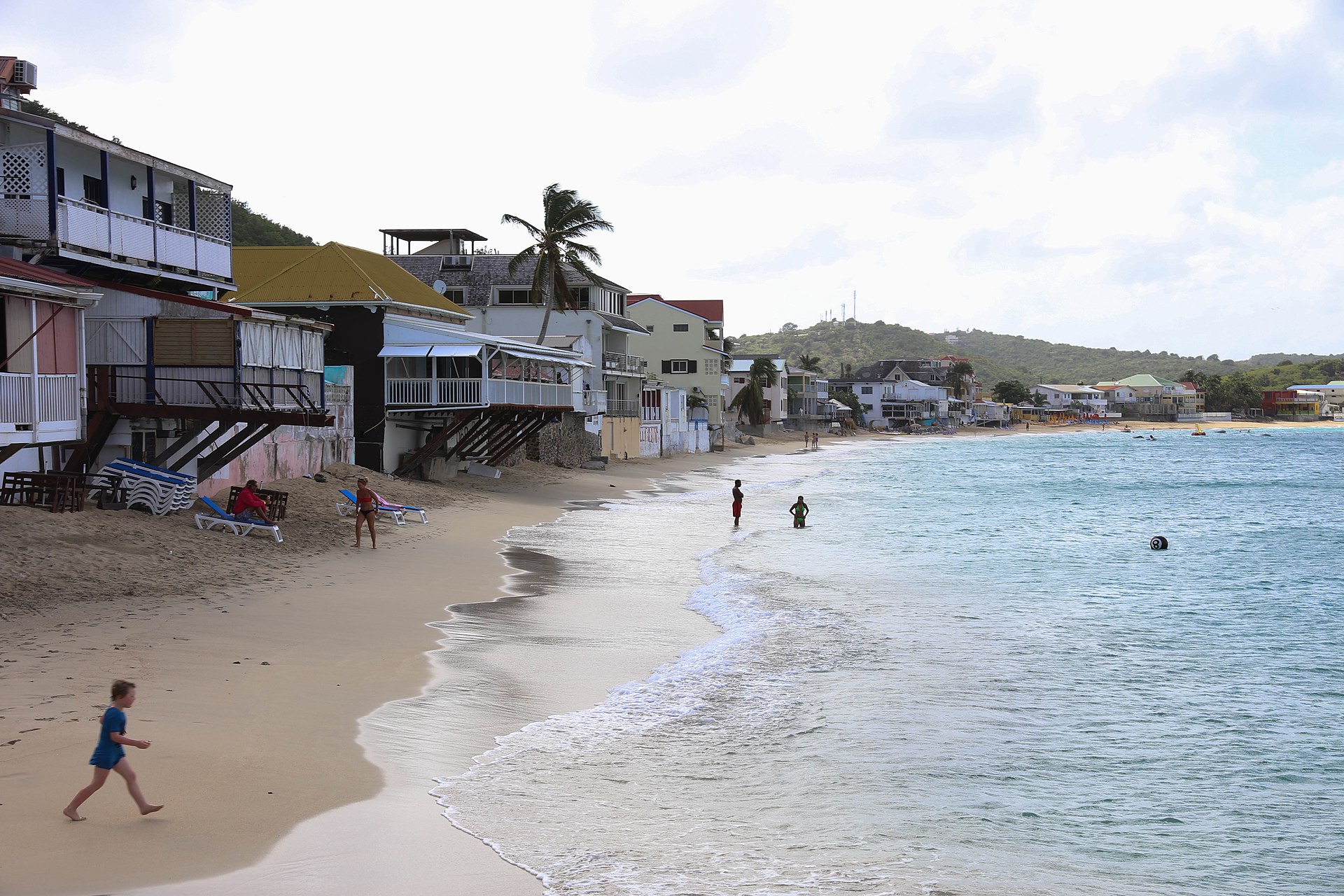
Grand Case · French
Calm water, sunset light and restaurants steps from the sand make this the best beach for pairing a swim with a long lunch or dinner.
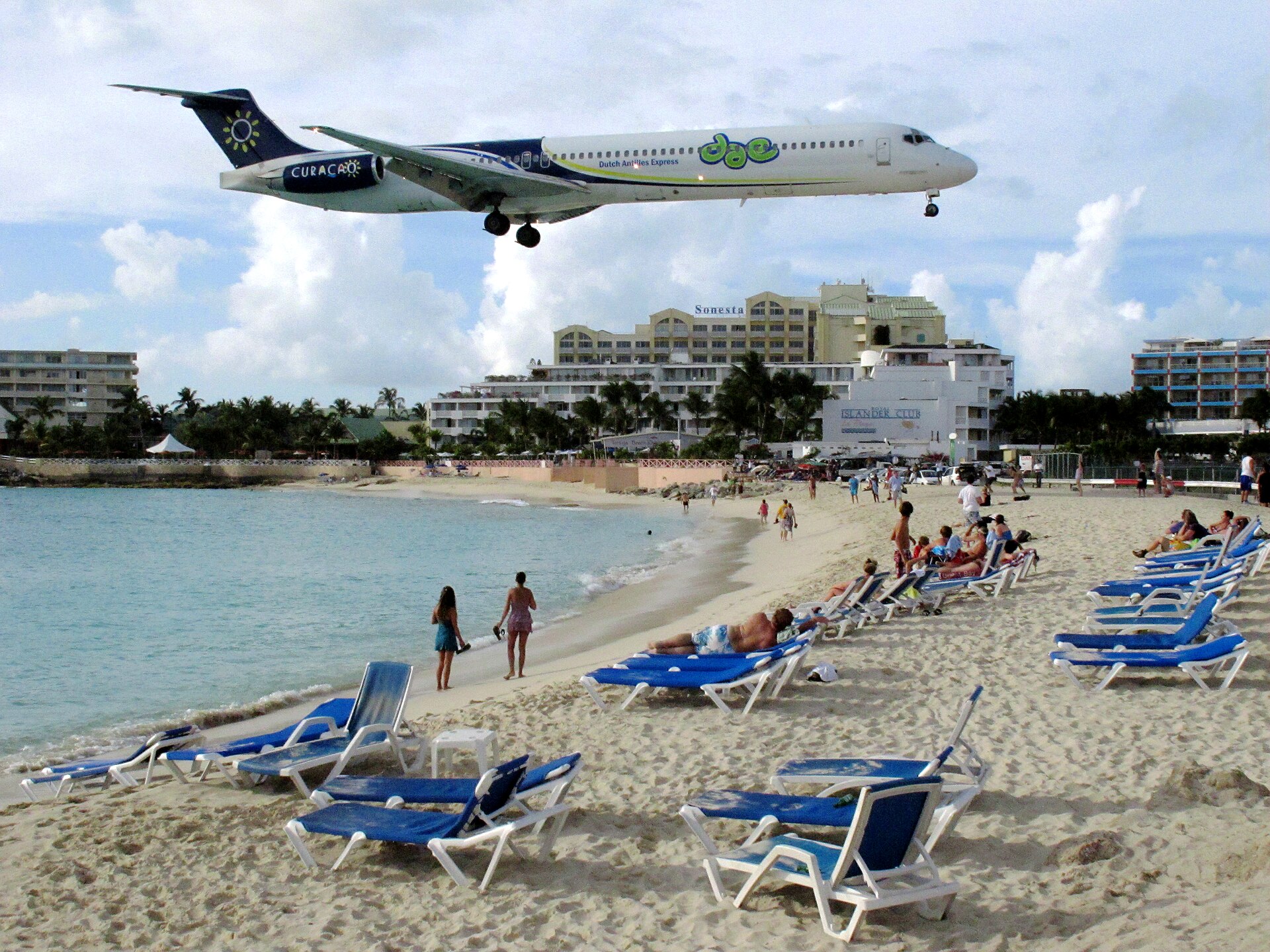
Maho Beach · Dutch
Famous for aircraft passing low over the sand. Visit briefly for the spectacle, obey all barriers and never stand at the fence during jet blast.
Happy Bay · French
A beautiful undeveloped crescent reached by a short trail from Friar’s Bay. Bring water and shade; avoid leaving valuables in the car or unattended on the beach.
Friar’s Bay · French
A friendly leeward bay with generally calm swimming, beach restaurants and an easy start for the walk to Happy Bay.
Baie Rouge · French
A dramatic red-gold sweep on the west coast. It can be serene or surprisingly rough; facilities are limited and conditions change with swell.
Anse Marcel · French
A protected, well-serviced cove with gentle water and beach amenities. Access is easy once down the steep approach road.
Mullet Bay · Dutch
The Dutch side’s strongest all-purpose beach: turquoise water, a broad sandy arc and casual food. Weekend crowds and occasional swell are the tradeoffs.
Cupecoy · Dutch
Small golden coves tucked under ochre cliffs. Sand comes and goes with swell; some sections are clothing optional and access can be steep.
Great Bay · Dutch
A convenient urban beach beside Philipsburg’s boardwalk. It is best for a walk, lunch and cruise-day people-watching.
The eastern shoreline carries the greatest exposure
Checked July 29, 2026
NOAA’s daily tool and USF reporting show 2026 remains one of the largest Caribbean sargassum years. Orient Bay is reporting moderate-to-high accumulation in recent local observations. Dawn Beach, Oyster Pond, Orient Bay and other east- or northeast-facing shores usually carry the highest exposure.
Grand Case, Friar’s Bay, Happy Bay, Baie Rouge, Mullet Bay and the western coves are generally safer bets, never guarantees.
The experiences that define the island
Saint Martin / Sint Maarten’s most worthwhile tours.
Pinel Island day
Take the small ferry from Cul-de-Sac, then swim, snorkel the reserve trail, walk the islet and settle into a long beach lunch.
Tintamarre & Creole Rock
Join a small boat for turtles, reef snorkeling and the uninhabited reserve islands north of the French side. Sea conditions decide the route.
Anguilla day trip
Use the public ferry from Marigot to Blowing Point or a licensed fast boat from the Dutch side. An overnight gives Anguilla’s beaches far more justice.
St. Barts by ferry
Cross from Marigot, Oyster Pond or Philipsburg when the relevant operator is running. The open-water ride can be rough; flying is the calmer alternative.
Two-side food day
Pair a Marigot bakery and market stop with Grand Case lolos or fine dining, then add a Dutch-side rum, brewery or international restaurant.
Fort Louis & Marigot
Climb to the fort for the island-and-Anguilla panorama, then explore the market, waterfront and surviving historic streets below.
Maho plane spotting
Check the live airport schedule, keep a safe distance from the runway fence and combine the stop with Mullet Bay.
Sunset sail
Depart Simpson Bay or the lagoon for the island’s leeward coast. A small-group boat is more peaceful; larger catamarans lean social.
Loterie Farm & Pic Paradis
Choose a guided hike, pool day or zipline in the forested highlands. Trails become slippery after rain and viewpoints are weather dependent.
Marine Park dive day
Dive Proselyte Reef, Carib Cargo or another Man of War Shoal site with a conservation-minded operator and the required marine-park tag.
On & under the water
A serious sailing base, accessible wrecks and better snorkeling by boat.
Deep-sea fishing
St. Martin / Sint Maarten has one of the northern Caribbean’s easiest charter markets, with boats based around Simpson Bay, Philipsburg, Marigot and Oyster Pond when operating. Trips target wahoo, mahi-mahi, tuna, sailfish and blue or white marlin around offshore banks, drop-offs and neighboring-island waters.
Best timing: Wahoo is a winter favorite, mahi often improves in spring and billfish become more prominent in warmer periods. Confirm which country the boat departs from and whether the planned route crosses a maritime border requiring additional formalities.
Sailing Saint Martin, Sint Maarten & Anguilla
Charter bases, bridges, French and Dutch clearance, anchorages, provisioning, detailed Anguilla permits and realistic seven- or ten-night routes.
Scuba diving
The Dutch-side Man of War Shoal Marine Park protects nine official dive sites from roughly 30 to 70 feet. Proselyte Reef contains the remains of a Spanish warship lost in 1801; Carib Cargo is a popular wreck with frequent turtle sightings. Fish Bowl, Mike’s Maze, Hen & Chicken and Tiegland add reef, shark and swim-through variety.
Expect Caribbean reef sharks, turtles, southern stingrays, eagle rays, barracuda, lobster and schooling reef fish. The French side adds Creole Rock, Tintamarre and outer-island reefs. Conditions, visibility and current vary; marine-park tags or reserve rules may apply.
Reef health
The protected areas retain meaningful coral, seagrass and fish habitat, but “pristine” is too generous. Hurricane damage, heat stress, bleaching, disease, runoff, coastal development and anchoring affect the island. Choose a mooring-conscious operator that can describe current site conditions.
Snorkeling
Creole Rock, Pinel’s underwater trail and Tintamarre are the headline boat-access sites. From shore, try the rocky ends of Grand Case, Friar’s Bay, Mullet Bay or Little Bay only in calm water. Broad sandy centers may be beautiful but hold less habitat.
Surfing
The island has real but inconsistent surf. Le Galion is the classic learning area when access and rentals are available; Wilderness and more exposed northern reefs suit experienced surfers with local guidance. Cupecoy, Mullet Bay and Beacon Hill can work on seasonal swell. Shallow reef, sea urchins, currents and limited rescue coverage make blind paddling a poor plan.
Culture & trails
The island’s most interesting border is cultural, not political.
Culture
Saint Martin’s identity is African-Caribbean, European and deeply regional. English is the everyday bridge language, while French, Dutch, local English-based Creole, Spanish, Haitian Creole and Papiamento are all heard. Carnival is celebrated on both sides at different times, and music moves easily between soca, calypso, zouk, reggae, dancehall and steelpan.
Food is the clearest contrast: Grand Case pairs French technique with Caribbean ingredients and lolos; Marigot brings bakeries and market culture; the Dutch side adds a remarkably international restaurant scene. Conch, johnnycakes, ribs, saltfish, lobster, guavaberry and rum connect the island beneath the flags.
Hiking
Pic Paradis and the Loterie Farm network offer the central highland experience. The Sentier des Froussards links wild northern coastline and Petites Cayes; the trail from Friar’s Bay to Happy Bay is the easiest beach walk. Coastal reserve routes around Anse Marcel, Cul-de-Sac and the eastern headlands are exposed and minimally shaded.
Start early, carry more water than the mileage suggests and avoid isolated trails alone. Loose rock, cactus, heat and sudden showers matter more than elevation. After heavy rain, forest paths can become slick enough to cancel.
The annual calendar
Race week, electronic nights and one shared island day.
March shows off Sint Maarten's international side through sailing and electronic music. November turns toward local identity as both sides mark the history and culture of the island they share.
Usually early March · Simpson Bay & island waters
St. Maarten Heineken Regatta
International fleets race by day while major concerts and parties bring crews, residents and visitors together after sunset.Usually March · Venues across the island
SXM Festival
Five days and nights of electronic music unfold across beaches, clubs, villas and open-air settings on both sides of the island.November 11 · French and Dutch sides
St. Martin's Day
Ceremonies, traditional food, steelpan, music and cultural performances celebrate a shared island identity beyond the border.Restaurants & hotels
Come hungry. The island’s dining reputation is not marketing fluff.
Restaurants change hands and many French-side kitchens close for part of late summer or early fall. Confirm current hours and reserve Grand Case dinners well ahead in winter.
Eat your way across both sides
Food tours, famous dishes, landmark restaurants, lolos, floating and beach bars, cooking classes, rum tastings and three ready-made food days.
Le Pressoir, Bistrot Caraïbes, Ocean 82, La Villa and rotating chef-led dining rooms along the boulevard
Sky’s the Limit and the lolos, beach bars, bakeries and small Creole kitchens
Beach-club lunches, Le Piment and village-square dining; Marigot bakeries, market stalls and marina restaurants
Sale & Pepe, The Palms, Pineapple Pete, Jai’s, Lagoonies and an unusually broad range of international kitchens
Emilio’s, Holland House, beachfront boardwalk spots, resort dining and Porto Cupecoy restaurants
Hotel strategy
Choose an evening neighborhood first.
Best for food lovers
Le Petit Hotel, Grand Case Beach Club or L’Esplanade keep dinner walkable and the bay outside your door.
Best beach-resort stay
La Playa or Orient Beach Hotel for activity; La Samanna for west-coast luxury; Secrets or Anse Marcel residences for a protected cove.
Best Dutch-side convenience
Mary’s Boon or a Simpson Bay condo for logistics; The Morgan or Sonesta for Maho energy; Holland House or Divi Little Bay for short stays near Philipsburg.
Before you go
The practical details.
English works island-wide. French dominates official life in the north; Dutch and English are official in the south.
Euros are standard on the French side. The Caribbean guilder replaced the former Antillean guilder in Sint Maarten in 2025. U.S. dollars are widely accepted.
Cards work broadly. Carry euros and small U.S. notes for ferries, markets, buses, beach parking, tips and small vendors.
French Type E and Dutch-side North American Type A/B are typical. Some hotels provide both; use dual-voltage devices.
Much supply is desalinated or stored in cisterns. Treatment and interruptions vary; ask the hotel before drinking from the tap.
Road rules feel familiar to U.S. visitors, but traffic, scooters, potholes, flooding and bridge openings slow the island.
Transportation
A rental car is the best tool for beaches and dinners. Most companies allow the land-border crossing, but confirm insurance covers both jurisdictions. Taxis are useful but expensive for repeated cross-island trips. Minibuses connect major settlements without a dependable tourist timetable. Avoid leaving anything visible in a parked car.
How long to stay
Five nights covers both sides and one boat day. Seven or eight nights lets you slow down, add Anguilla or St. Barts and recover from a weather cancellation. Three nights works only as a gateway stop.
Safety
Both sides currently carry U.S. Level 1 guidance. Normal precautions still matter: use licensed taxis, secure villas and cars, avoid isolated beaches after dark and keep valuables off unattended sand. Maho’s jet blast, rough surf, scooters and drinking-and-driving create more preventable risk than the international border.
Health & vaccines
Review routine vaccines and CDC guidance for both jurisdictions. Mosquito protection matters for dengue and other mosquito-borne disease. Yellow-fever proof may be required after travel through a risk country. Serious trauma, diving injury or complex illness can require evacuation, so insurance should include medical transport.
Entry forms, ferry schedules, bridge openings, health advice, hotel operations and sea conditions can change. Reconfirm details with official sources and your providers before booking or departing.
Research desk
Official sources & live checks
Ferry terminals, entry forms, bridge openings, restaurants, sargassum and trail access can change quickly. Recheck the pieces that can sink a day plan before leaving the hotel.