Know the island
Martinique gathers several complete worlds into one island.
The south supplies pale beaches, villas and the Caribbean’s largest French sailing base. The northwest rises into rainforest and Mount Pelée, with black sand and the haunting history of Saint-Pierre. The Caravelle Peninsula adds surf and Atlantic drama, while Fort-de-France brings markets, architecture and the island’s modern cultural pulse. The most rewarding trip combines at least two regions.
A brief history
Kalinago people inhabited Martinique before Europeans arrived. Columbus sighted the island in 1502; French settlers established a colony in 1635. Sugar and plantation wealth were built through the enslavement of Africans, whose descendants profoundly shaped Martinican language, food, music and identity. Slavery was permanently abolished in 1848.
Mount Pelée’s eruption on May 8, 1902 destroyed Saint-Pierre and killed roughly 28,000 people. Martinique became a French overseas department in 1946 and is now governed as a single territorial collectivity. It remains part of France and the European Union, while a distinct Martinican identity—and Aimé Césaire’s political and literary legacy—runs through public life.
What Martinique is most known for
Mount Pelée, Les Salines, rhum agricole, French-Creole food, round-yole racing, Saint-Pierre, Aimé Césaire, tropical gardens, sailing and the elegant collision of Caribbean and French culture.
Geography
Martinique is roughly 50 miles long and 22 miles across. The mountainous north is volcanic, wet and intensely green; the gentler south is drier and beachier. Mount Pelée reaches 1,397 meters (4,583 feet). The entire island is a UNESCO biosphere reserve, and Mount Pelée with the northern pitons holds World Heritage status.
Plan your trip
Late winter and early spring bring the island’s easiest combination of sun, sea and trails.
February–April
The driest stretch, with lower humidity, reliable beach days and better odds for clear hiking. It is also the busiest and most expensive period.
May–June
Lush scenery, warm water and lower rates between tropical showers. Sargassum risk rises on exposed Atlantic shores.
July
Hot, humid and festive as the Tour des Yoles approaches. Expect tropical showers, active sargassum on exposed Atlantic shores and the need for flexible hurricane-season bookings.
August–November
The wettest, hottest and most hurricane-sensitive period. Trails become muddy, rivers rise quickly and businesses may reduce hours.
Is Martinique hurricane-safe?
No. Atlantic hurricane season runs June through November, with the greatest historical risk from August into October. Martinique has robust French infrastructure, but no island can make a storm safe or preserve a tightly timed itinerary. Buy suitable insurance and use flexible air, hotel and ferry bookings.
How to get there
Fly into the center of the island—or arrive by sea from three Caribbean neighbors.
Aimé Césaire International (FDF)
The airport sits in Le Lamentin, near Fort-de-France. Direct and connecting service links Martinique with metropolitan France, North America and regional hubs, with schedules varying by season. Approximate drives are 25–50 minutes to Trois-Îlets, 45–75 to Sainte-Anne, 45–70 to Tartane and 50–90 to Saint-Pierre.
Saint Lucia
FRS Express operates passenger service between Fort-de-France and Castries on selected days, with a typical nonstop crossing of about 90 minutes. This is international travel: arrive early for check-in, immigration and baggage procedures.
Dominica & Guadeloupe
Scheduled ferries link Fort-de-France with Roseau in roughly 2¼ hours nonstop and continue to Pointe-à-Pitre, Guadeloupe, in roughly 4½ hours depending on stops and sea conditions. Frequency varies seasonally; never protect a separate flight with an optimistic ferry connection.
Fort-de-France Bay
Blue Lines runs year-round passenger shuttles between Fort-de-France and Pointe du Bout, Trois-Îlets and Anse à l’Âne. Typical crossings take about 15–25 minutes and can save both driving and parking. These are local transit.
Choose your Martinique
Where to stay, region by region
For a first visit, pair the easy southwest or south with two or three nights in the volcanic north or on the Caravelle Peninsula. The contrast is the point.
Best for a first trip, resorts & easy sightseeing
Trois-Îlets, Pointe du Bout & Anse Mitan
This polished southwest base combines swimmable beaches, restaurants, water sports and the most useful local boat connection to Fort-de-France. Pointe du Bout feels resort-like; nearby Trois-Îlets has more history and village character.
- Nearby
- Anse Mitan, Savane des Esclaves, golf, Fort-de-France ferry
- Consider
- La Pagerie, Hotel Bakoua, Hotel Bambou and La Suite Villa
Best for snorkeling, sunsets & romance
Les Anses-d’Arlet & Le Diamant
The southwest coast is Martinique at its most photogenic: church-front beaches, turtle-friendly seagrass, fishing villages and views of Diamond Rock. Le Diamant has more villas and a long dramatic beach; Anses-d’Arlet has better protected swimming.
- Nearby
- Grande Anse, Anse Dufour, Anse Noire, Diamond Rock, Cap 110
- Consider
- Diamant les Bains, small hotels, apartments and hillside villas
Best for southern beaches, families & sailing
Sainte-Luce, Le Marin & Sainte-Anne
Stay here for the easiest access to Les Salines, Pointe Marin and the island’s principal sailing base. Sainte-Luce has a friendly waterfront and family resorts; Sainte-Anne is beach-first; Le Marin is practical for crews and charter departures.
- Nearby
- Les Salines, Pointe Marin, Anse Figuier, Le Marin marina
- Consider
- Club Med Les Boucaniers, Pierre & Vacances Sainte-Luce, gîtes and villas
Best for surfing, nature & Atlantic character
Tartane & the Caravelle Peninsula
Tartane gives you surf breaks, fishing-village life and direct access to the Caravelle nature reserve. It is a compelling independent base, but the Atlantic side is windier, wetter and more exposed to sargassum than the Caribbean coast.
- Nearby
- Anse Bonneville, Caravelle trails, Château Dubuc, Baie du Trésor
- Consider
- French Coco, Hotel Résidence Océane and small holiday rentals
Best for history, hiking & wreck diving
Saint-Pierre, Le Carbet & Le Prêcheur
The volcanic northwest is greener, quieter and profoundly atmospheric. Base here for Mount Pelée, Saint-Pierre’s ruins, black-sand coves and the island’s most distinctive wreck diving. Full-service lodging and late-night dining are limited.
- Nearby
- Mount Pelée, Saint-Pierre, Anse Couleuvre, Depaz, north-coast diving
- Consider
- Villa Saint-Pierre, intimate guesthouses and self-catering gîtes
Best for culture, markets & short stays
Fort-de-France & Schoelcher
The capital area puts architecture, markets, museums and city restaurants close at hand. It is the transport hub; Schoelcher softens the city with waterfront lodging and easier parking.
- Nearby
- Grand Marché, Schoelcher Library, cathedral, Balata, ferry network
- Consider
- Simon Hotel, Fort Savane, Apolline and Hotel Pelican
Best for villas, kiteboarding & Atlantic islets
Le François & Le Vauclin
Choose the southeast for lagoon excursions, the fonds blancs and a quiet villa holiday. The reef-studded Atlantic water is beautiful but requires boat knowledge, and beaches here carry the island’s highest sargassum exposure.
- Nearby
- Baignoire de Joséphine, Pointe Faula, Habitation Clément, Cap Est
- Consider
- Plein Soleil, Cap Est area villas and small waterfront rentals
White sand, black sand & everything between
Beaches worth building a day around.
The sheltered Caribbean coast generally delivers calmer swimming and clearer snorkeling. Atlantic beaches are windier and wilder, with reef lagoons, surf and a much greater chance of sargassum.
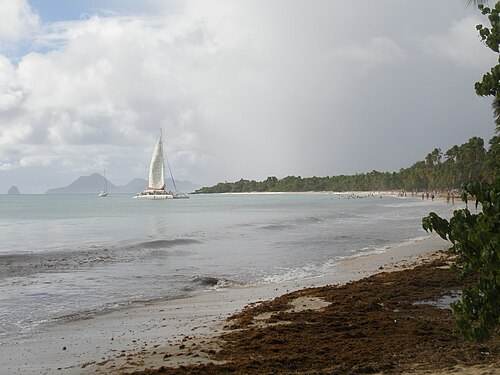
Grande Anse des Salines
Martinique’s signature sweep of pale sand and coconut palms. Arrive early for shade and parking; facilities are casual, and sargassum varies with wind and cleanup.
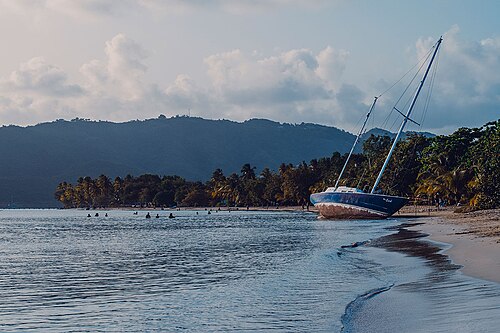
Pointe Marin
A long, protected southern beach with gentle water, cafés and water sports. Excellent for families, though it feels busier than a secluded cove.
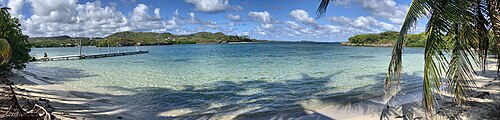
Anse Michel & Cap Chevalier
Shallow turquoise water behind an offshore reef, popular for kayaking and kiteboarding. The windward setting also makes seaweed exposure significant.
Anse Figuier
A convenient, family-friendly cove with shade, picnic space and calm water between Sainte-Luce and Le Marin.
Corps de Garde
A broad Sainte-Luce beach with facilities, swimming and plenty of room. It is an easy all-day choice for families.
Grande Anse d’Arlet
A beautiful west-coast bay with restaurants, clear water and turtles often feeding over seagrass. Give wildlife space and never chase it.
Anse Dufour
A tiny golden-sand fishing cove known for clear water and occasional turtles. Parking is difficult; arrive early and expect limited personal space.
Anse Noire
A steep stairway leads to Martinique’s rare black-sand cove, framed by forested headlands. Calm mornings are best for snorkeling.
Plage du Diamant
A magnificent long beach facing Diamond Rock. Powerful shore break and current often make it better for walking and views than casual swimming.
Anse Couleuvre
A wild, black-sand beach at the end of the northwest road, backed by rainforest. The drive, short walk and changing sea conditions are part of the experience.
Le Carbet & Saint-Pierre
Dark volcanic sand, Mount Pelée views and usually calmer Caribbean water. Beach character changes by village and season.
Pointe Faula
A very shallow lagoon and major kite spot near Le Vauclin. It can be spectacular when clear—and heavily affected when Atlantic sargassum arrives.
The Atlantic coast carries the greatest exposure
Checked July 29, 2026
Regional monitoring shows record-high June sargassum in the Caribbean Sea and continuing beaching across the Lesser Antilles into July. Martinique’s Atlantic-facing east and southeast are most exposed—especially Le Vauclin, Le François, Le Robert, Tartane’s windward bays, Cap Chevalier and exposed parts of Sainte-Anne. West-coast coves around Anses-d’Arlet, Le Carbet and Saint-Pierre are usually more dependable, though no beach is guaranteed clear.
Beyond the beach
Martinique’s most rewarding tours and day trips.
Distances are manageable, but mountain roads, city traffic and rum tastings reward sensible regional planning. Reserve weather-dependent hikes and boat days with room to move them.
Mount Pelée
Hike the volcano on a clear, settled day. Choose the route for your fitness, carry layers and water, and use a guide when conditions or navigation exceed your experience.
Saint-Pierre
Walk the remains of the city destroyed in 1902, visit the memorial museum and understand the eruption as human history.
Jardin de Balata
Explore a beautifully designed tropical garden above Fort-de-France, ideally early before tour groups and afternoon showers.
Habitation Clément
Combine Creole architecture, gardens, contemporary art and the story of rhum agricole. Tastings require a driver or an admirably restrained volunteer.
Diamond Rock & Cap 110
Pair southwest viewpoints or a boat trip with Laurent Valère’s memorial to enslaved Africans lost in an 1830 shipwreck.
Fonds blancs
Boat into the shallow Atlantic lagoon around Le François for white-bottom swimming and islets. Choose a small, responsible operator and check sargassum conditions.
Caravelle Peninsula
Walk coastal forest, mangroves and dry woodland to viewpoints and the ruins of Château Dubuc. Carry sun protection; exposed sections feel much hotter than the map.
Gorges de la Falaise
Descend into a narrow gorge near Ajoupa-Bouillon with an authorized local guide. Access can close after heavy rain or unsafe river flow.
Fort-de-France
Connect the Grand Marché, Schoelcher Library, Saint-Louis Cathedral and Aimé Césaire’s legacy on foot, then return south by local boat.
Savane des Esclaves
Spend time with a carefully interpreted reconstruction exploring Indigenous history, slavery, emancipation, rural life and medicinal plants.
Traditional yole experience
Learn why the round yole is both a demanding sailing craft and a pillar of Martinican identity. The annual tour is the spectacle; supervised outings reveal the skill.
North-coast wildlife cruise
Dolphins and seasonal whales inhabit the AGOA sanctuary, but sightings are never guaranteed. Choose operators that keep distance and never pursue resting animals.
On & under the water
Wrecks in the north, turtles in the west and serious sailing in the south.
Deep-sea fishing
Martinique has a genuine local offshore-fishing culture with charters from Le Marin, Fort-de-France Bay and several west-coast ports. Captains troll or fish around FADs for yellowfin tuna, mahi-mahi, wahoo, blue marlin and sailfish. French terminology and booking channels are common.
Best timing: Tuna is a major target, while mahi and billfish follow seasonal bait and current. Confirm whether the trip is a private tourist charter or a shared local outing, and discuss catch-and-release expectations before departure.
Scuba diving
Saint-Pierre’s wreck field is Martinique’s signature diving legacy. Ships lost in the 1902 eruption include the Roraima, with deeper profiles intended for appropriately trained divers. The Nahoon wreck is another advanced favorite. Northwest sites such as the Citadelle and Canyons de Babodi add dramatic volcanic topography.
Diamond Rock offers walls, passages and current-dependent diving, while Anses-d’Arlet provides easier reefs, seagrass and turtle encounters suitable for newer divers. Expect reef fish, morays, barracuda, rays, lobster and turtles; wildlife never reads the itinerary.
Snorkeling
Grande Anse d’Arlet, Anse Dufour and Anse Noire offer the best-known shore access when the sea is calm. Turtles often graze seagrass in the southwest; remain horizontal, keep several meters away and never block a surfacing animal. Boat trips reach reefs around Diamond Rock and quieter coves.
Sailing
Le Marin is one of the Caribbean’s major charter and service hubs, with 830 berths, 100 moorings and a deep network of repair, provisioning and marine businesses. Common cruising stops include Sainte-Anne, Grande Anse d’Arlet, Anse Mitan, Fort-de-France Bay, Le Carbet and Saint-Pierre in settled conditions.
The Caribbean west coast is generally the comfortable lee. Atlantic lagoons around Le Robert and Le François are reef-studded and demand current charts, good light and local knowledge. Provision fully around Le Marin before heading north; supermarkets, produce markets, fuel and chandleries are concentrated there.
International arrivals must complete French customs and immigration formalities at an authorized port. Office locations, hours and digital procedures can change, so confirm before landfall. Domestic movement around Martinique does not require repeated clearance.
Surfing & kiting
Anse Bonneville—often called Surfers Beach—near Tartane is the island’s main surf hub, with schools and board rental. More exposed breaks around Basse-Pointe and the Atlantic coast require experience and local knowledge; Anse Couleuvre can work on seasonal northwest swell. Reef, current and rapidly changing conditions matter everywhere.
For kiteboarding, Pointe Faula’s shallow lagoon and the Cap Chevalier area are established choices. Trade wind is the attraction; reefs and sargassum are the complications.
Creole identity & volcanic trails
Culture shapes the island’s language, food, music and daily life.
Culture
French is official, while Martinican Creole is widely spoken. African, European, Indigenous and Indian influences meet in music, language, spirituality and food. Bèlè music and dance, zouk, Carnival and the Tour des Yoles remain living expressions.
Martinique’s round yole is recognized by UNESCO as intangible cultural heritage. The island is also inseparable from poet and statesman Aimé Césaire, a founder of the Négritude movement. Engage local museums and guides before reducing the story to rum estates and pretty façades.
Hiking
Mount Pelée is the summit goal, but its cloud, rain, wind and steep volcanic terrain demand respect. The demanding Morne-Macouba route from Grand-Rivière is about 17 kilometers with roughly 1,300 meters of ascent and can require eight hours merely to reach the second refuge; it is for advanced hikers.
More approachable choices include Caravelle Peninsula loops, the Canal des Esclaves/Beauregard route, coastal walking from Anse Couleuvre toward Grand-Rivière, and forest paths around the Pitons du Carbet. Trails become slippery after rain, river crossings can rise quickly and guided canyon outings may close for safety.
The annual calendar
Two extraordinary ways to experience Martinique in motion.
Martinique's essential celebrations occupy opposite sides of the calendar: Carnival turns identity and satire into four unforgettable street days, while summer's Tour des Yoles makes traditional sailing the island's loudest and most colorful spectator sport.
January–Ash Wednesday · Fort-de-France & island-wide
Martinique Carnival
Parades build toward four distinctive days of color, burlesque weddings, red-devil costumes and the black-and-white mourning—and symbolic farewell—of King Vaval.Late July–early August · Stages around Martinique
Tour des Yoles Rondes
Traditional round-yole crews race around the island as waterfront towns and spectator boats erupt into an exuberant blend of sailing, heritage and celebration.Restaurants & hotels
French technique, Creole memory and produce that actually tastes tropical.
Look for accras, boudin créole, colombo, dombrés, chatrou, lambi, grilled fish, poulet boucané, pâtés salés, coconut desserts and cane-juice rhum agricole. Restaurant opening days change often—reserve and reconfirm.
Chez Carole in the Grand Marché, The Yellow, Simon Hotel dining and contemporary city bistros
Le Kano, Pignon Nouvelle Vague, Zandoli at La Suite Villa and the village’s casual waterfront tables
Ti Sable, New Cap, La Voile Blanche and simple beach restaurants centered on the day’s fish
Case Coco, Le Zanzibar, La Dunette and marina kitchens ranging from crêpes to sophisticated Creole dining
Le Petibonum at Le Carbet, Le Fromager near Saint-Pierre, Tante Arlette in Grand’Rivière and small table-d’hôte kitchens
French Coco, Le Ratelot, Plein Soleil and prearranged meals connected to Atlantic-coast excursions
Hotel strategy
The island rewards a split stay more than a grand resort search.
South & southwest
Choose Trois-Îlets for convenience, Sainte-Luce for family ease, Sainte-Anne for beaches or Le Marin when the trip revolves around a boat.
North & Atlantic
Small hotels and gîtes provide more character near Saint-Pierre and Tartane, with fewer services and a much better sense of place.
Book with care
Confirm air-conditioning, parking, stairs, restaurant days and whether the “sea view” faces the calm Caribbean or a windy Atlantic hillside.
Practical details
France in the Caribbean comes with excellent roads, euros—and its own fine print.
French is official. Martinican Creole is widely spoken; English is less dependable outside tourism businesses.
ATMs are widespread throughout the island.
Carry some euros for markets, small beaches and rural vendors.
North American visitors need an adapter and must confirm dual-voltage appliances.
Shortages and rationing recur. Follow local notices after outages or storms.
A rental car opens the coasts and north. Expect commuter traffic around Fort-de-France.
Cash & cards
Visa and Mastercard are widely accepted at hotels, fuel stations and established restaurants. Some automated fuel pumps require a chip-and-PIN card. Service is included in restaurant prices under French rules; rounding up or leaving 5–10% for exceptional care is appreciated, not compulsory.
Transportation
Traffic drives on the right. A rental car is the most useful way to connect beaches, trails and small towns, but mountain roads are narrow and rush-hour traffic near Fort-de-France is serious. Taxis are expensive; buses suit selected corridors. Local sea shuttles are excellent for crossing Fort-de-France Bay.
Safety
The U.S. advisory for the French West Indies is Level 1: exercise normal precautions. Petty theft remains possible, so leave nothing visible in a parked car, secure valuables and use ordinary city awareness after dark. The larger risks are heat, sun, mosquitoes, rough water, flash flooding and entering unsupervised natural sites after rain.
Health, vaccines & entry
Be current on routine vaccines and seek current medical advice based on your origin and activities. Use mosquito protection for dengue and other mosquito-borne illness. Martinique is French and EU territory but not part of the Schengen Area; passport and visa rules for French overseas territories can differ, so confirm the rule for your nationality before travel.
Research desk
Official sources & live checks
Ferry schedules, trail access, seaweed, restaurant days, yacht formalities and weather can change quickly. Use these official and specialist sources before booking.