Know the country
One country. Several completely different Caribbean trips.
The Dominican Republic occupies the eastern portion of Hispaniola and is the Caribbean’s second-largest country. Punta Cana made it famous, but the full story includes the oldest European-built city in the Americas, the region’s highest mountain, pine forest, desert, waterfalls, whale habitat, cacao farms, baseball, bachata and hundreds of miles of coastline.
A brief history
Taíno communities organized Hispaniola into regional chiefdoms before Christopher Columbus arrived in 1492. Spanish colonization brought warfare, disease, forced labor and the near-destruction of Indigenous society, followed by the trafficking and enslavement of Africans. Santo Domingo became the first permanent European colonial center in the Americas.
The eastern colony declared independence from Haiti on February 27, 1844. The country later endured annexation attempts, U.S. occupations and Rafael Trujillo’s brutal dictatorship from 1930 until 1961. Modern Dominican identity reflects Taíno memory, African heritage and Spanish language, alongside migration and a large global diaspora.
What it is most known for
Punta Cana’s all-inclusive resorts, merengue and bachata, baseball, rum, cacao, cigars, amber and larimar, the Colonial City of Santo Domingo, Saona Island, Samaná’s humpback whales, Pico Duarte and a culture whose warmth travels much farther than its famously rapid Spanish.
Geography
The Atlantic borders the north and east; the Caribbean Sea borders the south. Four major mountain systems create sharp climate changes, from humid Samaná to the dry southwest. Pico Duarte rises to about 3,098 meters, while Lago Enriquillo sits below sea level. Haiti shares the island to the west.
Plan your trip
The best month depends on which Dominican Republic you want.
December–April
Comfortable coastal weather, lower humidity and the broadest appeal. Rates peak around Christmas, New Year and Easter.
Mid-Jan–March
Samaná’s humpback season overlaps with excellent hiking weather and cool nights in Jarabacoa and Constanza.
May & November
Good deals and fewer crowds, but rain and storm-season uncertainty require flexibility. Regional weather differs dramatically.
Is the Dominican Republic hurricane-safe?
No. The Atlantic season runs June 1–November 30, with the greatest concern generally from August through October. The country’s size means effects vary by region, but wind, flooding, landslides, rough seas and flight disruption can occur far from landfall. Buy coverage before a storm is named, use flexible bookings and follow official forecasts.
Arrivals & distances
Choose the airport after choosing the coast.
The Dominican Republic has multiple international gateways. Flying into the wrong one can add several expensive hours by road, so compare total journey. Every traveler must complete the free official e-Ticket for entry and departure; avoid look-alike websites that charge a processing fee.
PUJ and LRM
Punta Cana International Airport (PUJ) serves Bávaro, Cap Cana, Uvero Alto and much of the east. La Romana (LRM) is closest to Casa de Campo and Bayahíbe but has fewer flights. PUJ to Bayahíbe is commonly about an hour by road.
All-inclusives, Cap Cana, Saona, Bayahíbe and La Romana.
SDQ, POP, STI and AZS
Las Américas (SDQ) is the main Santo Domingo gateway. Puerto Plata (POP) serves the north coast; Santiago (STI) helps with the Cibao and mountains; El Catey (AZS) is the natural Samaná airport when seasonal service aligns.
Santo Domingo to Samaná is roughly 2.5–3 hours; Punta Cana to Puerto Plata can consume most of a day.
The decision that shapes the trip
Which part of the Dominican Republic should you stay in?
There is no single “best area.” Choose by the trip you want outside the hotel gates, then select the airport and property. A first visit of ten nights works beautifully as one beach region plus Santo Domingo—or as two contrasting nature-and-beach bases.
Best for easy resorts, families & first visits
Punta Cana, Bávaro & Cap Cana
The country’s simplest fly-and-flop choice pairs long pale beaches with the Caribbean’s deepest all-inclusive inventory. Bávaro is busiest and most social; Cap Cana is quieter and more polished; Uvero Alto feels more removed. The tradeoff is distance from Dominican cities, mountains and the southwest.
- Nearby
- Bávaro, Juanillo, Macao, Indigenous Eyes, golf, catamarans
- Consider
- Tortuga Bay, Eden Roc Cap Cana, Hyatt Ziva/Zilara Cap Cana, Lopesan Costa Bávaro, Excellence Punta Cana
Best for calm water, diving & Saona
Bayahíbe, Dominicus & La Romana
This Caribbean-facing coast usually has clearer, calmer water than Punta Cana and is the strongest base for diving. Bayahíbe is a working village and boat hub; Dominicus has the beach resorts; Casa de Campo offers gated luxury and golf near La Romana.
- Nearby
- Saona, Catalina, Cotubanamá National Park, Altos de Chavón
- Consider
- Casa de Campo, Hilton La Romana, Dreams Dominicus, Iberostar Selection Hacienda Dominicus, Tracadero
Best for history, food & urban culture
Santo Domingo & Juan Dolio
The capital is essential for travelers who want the Dominican Republic. Stay inside or beside the Colonial City for walkability, museums and restaurants. Juan Dolio adds a beach within roughly an hour, but it is not a substitute for the country’s best beach regions.
- Nearby
- Zona Colonial, Malecón, Los Tres Ojos, museums, nightlife
- Consider
- Casas del XVI, Kimpton Las Mercedes, Billini Hotel, JW Marriott; beach hotels and condos in Juan Dolio
Best for action, surf & north-coast variety
Puerto Plata, Sosúa & Cabarete
Puerto Plata brings history and resort infrastructure; Sosúa offers a protected bay and diving; Cabarete is the lively wind-and-surf town. This coast has more independent energy than Punta Cana, plus easy access to waterfalls, but Atlantic seas can be rougher.
- Nearby
- 27 Charcos, Fortaleza San Felipe, Playa Encuentro, Kite Beach
- Consider
- Casa Colonial, The Ocean Club Sosúa, Millennium Resort, Natura Cabana, Cabarete condos and boutique hotels
Best for natural beauty, whales & beach-hopping
Las Terrenas, Samaná & Las Galeras
The Samaná Peninsula combines jungle-covered hills, waterfalls, whale season and some of the country’s loveliest beaches. Las Terrenas has the broadest dining and lodging; Las Galeras feels smaller and wilder; Samaná town is practical for boats but less compelling as a beach base.
- Nearby
- Playa Rincón, El Limón, Los Haitises, Cayo Levantado, whale boats
- Consider
- Cayo Levantado Resort, Sublime Samaná, Mosquito Boutique Hotel, Villa Serena, Dominican Tree House Village
Best for mountains, hiking & adventure
Jarabacoa & Constanza
Trade palms for pine forest, waterfalls, river rafting and cool nights. Jarabacoa has better adventure infrastructure and access to Pico Duarte routes; Constanza is quieter, higher and wrapped in farms and mountain scenery. Neither works as a quick day trip from Punta Cana.
- Nearby
- Pico Duarte, Yaque del Norte, Jimenoa, Baiguate, Ébano Verde
- Consider
- Hotel Gran Jimenoa, Rancho Baiguate, Jarabacoa River Club, mountain villas; Altocerro near Constanza
Best for secluded new-generation resorts
Miches & Playa Esmeralda
Miches sits between the resort-developed east and the wilder northeast, with broad empty beaches, lagoons, cocoa country and mountain viewpoints. Luxury development is growing, but the region remains quieter and less convenient than Punta Cana.
- Nearby
- Playa Esmeralda, Montaña Redonda, Salto de La Jalda, cocoa routes
- Consider
- Club Med Michès Playa Esmeralda, Zemi Miches All-Inclusive Resort, Secrets Playa Esmeralda
Best for a remote road trip & wild nature
Barahona, Pedernales & the southwest
The least-developed major travel region is also the most dramatic: dry forest, mountains, clear rivers, pebble coves, crocodile habitat and Bahía de las Águilas. Roads are long, services thin and guides valuable. Come for expedition-style travel, not resort polish.
- Nearby
- Bahía de las Águilas, Jaragua, Lago Enriquillo, Los Patos, larimar country
- Consider
- El Quemaito, selected Barahona guesthouses, glamping near Cabo Rojo; expect simpler lodging around Pedernales
Atlantic energy & Caribbean calm
The beaches worth choosing a region around.
The east gives you long resort strands, the southeast has calmer Caribbean water, the north brings surf and the southwest delivers remote clarity. “Best” changes with weather, access and whether you want a lounger, a dive boat or nobody else in the photograph.
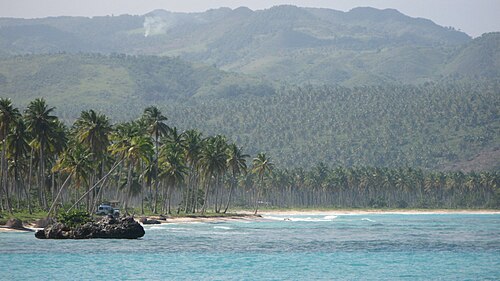
Playa Rincón
A long, palm-backed Samaná bay with green headlands and a freshwater edge. Conditions and development vary by section; combine it with Las Galeras.
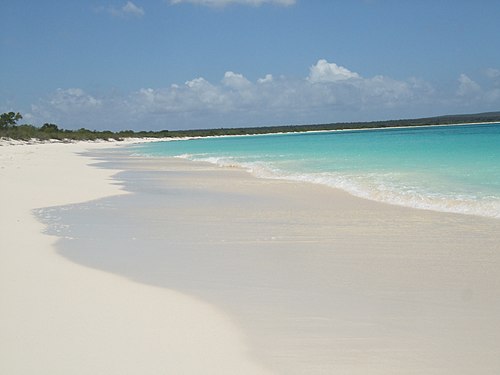
Bahía de las Águilas
A remote sweep of pale sand and clear water inside Jaragua National Park. Reach it from Pedernales or Cabo Rojo and bring shade, water and realistic expectations about facilities.
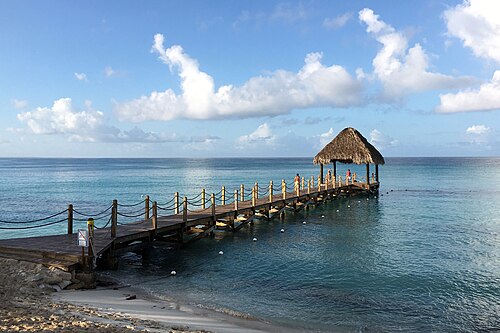
Playa Dominicus & Bayahíbe
Calmer Caribbean water, easy swimming and access to the country’s strongest diving and island trips. Dominicus is resort-led; Bayahíbe feels more like a village.
Bávaro Beach
The famous resort corridor: long, photogenic and convenient, with abundant activities. Boat traffic, crowds and seasonal sargassum can vary sharply by section.
Playa Juanillo
A manicured Cap Cana beach with pale sand and an upscale atmosphere. Access, minimum spend and operating rules can change, so confirm before arriving.
Macao Beach
A broad public beach north of Bávaro with surf schools, local food and fewer resort boundaries. Rip currents and shore break deserve attention.
Playa Cosón & Playa Bonita
Las Terrenas favorites that pair sand and palms with villas and independent restaurants. Cosón feels broader and wilder; Bonita is more developed.
Playa Grande
A handsome north-coast arc near Río San Juan, backed by greenery and known for strong surf and local fish lunches. Swimming conditions are not always gentle.
Cabarete & Kite Beach
The country’s wind-sports stage. Come for kiting, windsurfing and social energy.
Frontón & Madama
Boat- or hike-access coves near Las Galeras beneath dramatic cliffs. Go with a reputable local guide and let sea conditions decide the plan.
Sargassum report
Reviewed July 26, 2026
NOAA’s July 25 daily product shows ongoing sargassum inundation risk across parts of the Greater Antilles during an active regional season. In the Dominican Republic, east- and southeast-facing shores—including sections of Punta Cana, Bávaro, Cap Cana and occasionally Saona/Bayahíbe—are generally the most exposed from late spring through summer. Resorts may clear managed beaches daily. The north coast and protected Caribbean-facing coves can be useful alternatives, but no coast is guaranteed clear.
The experiences people travel for
Popular tours, matched to the right region.
The country is too large for a single resort to serve as a practical base for every headline experience. Choose tours near the region where they naturally belong—and save the cross-country drives for an actual road trip.
Saona Island—done thoughtfully
Depart from Bayahíbe for the shortest, most sensible route. Favor an early or smaller-group boat that includes Mano Juan or a quieter beach, ask exactly where it stops and never handle starfish or other wildlife.
Samaná humpback whales
Between January and March, authorized boats enter Samaná Bay to observe visiting humpbacks. Choose a responsible operator that follows approach rules and never promises touching or swimming with the whales.
Los Haitises by boat or kayak
Explore mangrove channels, limestone mogotes, bird habitat and caves with Indigenous pictographs. Routes leave from Samaná, Sabana de la Mar and Caño Hondo; boat, kayak and combination formats create very different days.
27 Charcos of Damajagua
Hike into the forest, then descend a guided series of natural chutes, jumps and pools near Puerto Plata. Most tours use only part of the full system, depending on water levels, fitness and current park operations.
Pico Duarte trek
Reach the Caribbean’s highest summit on a guided multi-day hike, commonly beginning near Jarabacoa. Expect long trail days, simple mountain lodging, cold nights and a trip that needs preparation.
Santo Domingo history and food
Walk the UNESCO-listed Colonial City with a knowledgeable guide, then connect its monuments to present-day Dominican life through a market, traditional lunch, cacao, rum or a thoughtfully designed food tour.
Bahía de las Águilas expedition
Combine the remote beach with Jaragua National Park and, on a longer itinerary, Barahona or Lago Enriquillo. A local driver-guide makes the distances, sparse services, heat and protected-area logistics far easier to manage.
El Limón waterfall
Hike or ride through the Samaná Peninsula’s green interior to the falls. Confirm trail conditions and swimming access; if horses are involved, choose a provider with visibly strong animal-care standards.
On & under the water
Dive the Caribbean side. Ride the Atlantic side.
Deep-sea fishing
The Dominican Republic has several distinct offshore bases. Cap Cana and Punta Cana are the most convenient for blue and white marlin, sailfish, mahi-mahi, wahoo and tuna; Casa de Campo adds a strong billfish culture, while Puerto Plata and Samaná serve the north coast and Atlantic banks.
Best timing: Billfish seasons differ sharply by coast, with white marlin especially associated with the east in spring and blue marlin later in warmer months. Choose the charter after choosing the region—cross-island transfers erase the advantage of a dawn departure.
Scuba diving
Bayahíbe is the country’s most dependable dive base, with calmer Caribbean conditions, reefs, walls and boat access toward Catalina, Catalinita and Saona. The St. George wreck is the signature advanced profile. Catalina’s wall and aquarium sites suit a range of divers when conditions cooperate.
Sosúa offers north-coast reefs, walls and seasonal variety; Punta Cana diving is convenient but visibility and boat conditions can be less consistent. Montecristi is remote and specialist territory. Hawksbill turtles, southern stingrays, morays, eagle rays, reef fish and occasional nurse sharks are realistic; megafauna should never be promised.
Snorkeling
Bayahíbe/Dominicus, Catalina and selected Saona stops offer the most reliable vacation snorkeling. Sosúa Bay and Cayo Arena can be enjoyable in calm weather, though crowding and boat traffic affect the experience. Many broad resort beaches are sandy; a beautiful beach does not automatically mean beautiful snorkeling.
Sailing & boating
Day catamarans dominate Punta Cana and Bayahíbe; Samaná adds whale, Los Haitises and Cayo Levantado routes. This is not a compact BVI-style bareboat circuit. Long exposed coasts, commercial ports, protected areas and limited casual anchorages favor local skippers.
International marinas include facilities around Cap Cana, La Romana/Casa de Campo, Samaná and Puerto Plata. Visiting yachts should confirm advance notice, customs, immigration, agriculture, cruising permits and park rules directly with the chosen marina before arrival. Jumbo, Nacional, La Sirena and Super Pola are useful provisioning chains in larger centers.
Surfing, kiting & wind
Playa Encuentro near Cabarete is the country’s principal surf hub, with breaks for multiple levels when matched to a reputable school. Cabarete Bay and Kite Beach are internationally known for kitesurfing and windsurfing, especially in the windier months. Macao is the convenient east-coast surf option. Reef, shore break, current and crowded lesson zones all deserve respect.
Culture, trails & wild country
The resort is only one chapter.
Culture
Spanish is the national language, but Dominican culture speaks through merengue, bachata, dembow, baseball, Carnival masks, colmados, family cooking and a gift for turning an ordinary evening into live percussion. Taíno, African and Spanish roots meet in food, religion, art and language; Haitian history and migration are inseparable from the island’s fuller story.
Use Santo Domingo’s museums and a local guide to confront the Colonial City’s beauty and violence together. Attend community-led cultural experiences.
Hiking & adventure
Pico Duarte is a strenuous guided multi-day trek, not a beach excursion with better shoes. Jarabacoa adds rafting, canyoning and waterfall routes; Constanza offers cooler highland walks; Samaná has El Limón and coastal trails; the southwest combines dry forest, caves and remote protected areas.
Heavy rain can transform rivers and roads quickly. Use trained guides for canyoning, high mountains, caves and isolated parks, and never jump into freshwater without current local safety advice.
Colonial City
Give Santo Domingo at least one full day and one evening; the streets become more than monuments after dinner.
Baseball culture
Winter league runs roughly October–January. Tickets and schedules turn a city night into something distinctly Dominican.
Cacao & coffee
Visit a farm or cooperative that explains cultivation, labor and flavor.
Jaragua & Enriquillo
See dry forest, birds and crocodile habitat with a conservation-minded guide and serious heat planning.
Carnival
February celebrations vary by city; La Vega is famous, while Santo Domingo’s national parade usually arrives in March.
Music & dance
Take a bachata or merengue lesson, then hear the music where Dominicans actually dance.
The annual calendar
February belongs to Dominican Carnival.
Carnival is celebrated across the country, but every city brings its own characters, masks and traditions. La Vega is the classic high-energy choice; Santo Domingo adds a major national parade and easy access to the Colonial City.
Sundays in February · Nationwide
Dominican Carnival
La Vega's famously vivid diablos cojuelos lead one of the country's signature celebrations, while Santo Domingo's national parade gathers regional traditions around Independence season.Restaurants & hotels
Eat beyond the buffet at least once.
Dominican cooking is generous and regional: plantain, rice, beans, cassava, avocado, stewed meats, seafood and tropical fruit recur, but the meal changes between a Santo Domingo dining room, a north-coast fish shack and a mountain roadside stop.
La bandera, mangú with los tres golpes, sancocho, mofongo, chivo guisado, pescado con coco and yaniqueques
Use the Colonial City and Piantini for the broadest serious dining; mix a chef-led restaurant with Adrian Tropical, a market or a neighborhood comedor
Las Terrenas and Cabarete have strong independent scenes; Bayahíbe and Las Galeras reward local seafood; resort corridors require more advance research
Dominican coffee, cacao, fresh juices, Presidente beer and aged rum; mamajuana is potent, variable and not a substitute for hydration
Hotel strategy
Area first. Property second.
All-inclusive makes sense when...
You want an easy family trip, a broad activity program or predictable food and drink costs. Punta Cana and La Romana excel at this style.
Independent travel wins when...
Culture, local restaurants, hiking, surf or a road trip drives the decision. Las Terrenas, Cabarete, Santo Domingo, Jarabacoa and the southwest reward leaving the gates.
Split stays
For ten nights, pair Santo Domingo with Bayahíbe, or combine Las Terrenas with the north coast or mountains. Avoid pairing opposite corners merely because they look close on a Caribbean-scale map.
Practical details
The useful things to know before you go.
English is common in major resorts but far less reliable on road trips. A few Spanish phrases materially improve the trip.
RD$ is the local currency and the exchange rate floats. U.S. dollars are accepted in many tourist businesses, often at a weaker rate.
Cards work widely in hotels and larger restaurants. Carry smaller pesos for tolls, tips, parking, colmados and rural stops.
U.S.-style plugs and voltage are standard. Power irregularities occur outside major resorts, so a surge protector is useful.
Use sealed bottled or properly purified water, including for brushing teeth if advised locally.
Traffic can be aggressive and road lighting limited. Daytime driving is strongly preferable.
Transportation
Drive on the right. Caribe Tours, Metro and Expreso Bávaro connect many major cities, but schedules do not solve every beach or park. Private transfers are easiest between tourist zones. Rental cars offer freedom, yet aggressive traffic, motorcycles, limited lighting, speed bumps and road conditions make daytime driving strongly preferable. Santo Domingo also has a metro.
Safety
The U.S. advisory is Level 2—exercise increased caution due to crime. Tourist zones receive more policing, but robbery and assault remain concerns. Use hotel-arranged or reputable transport, keep phones and jewelry discreet, avoid isolated areas after dark, never leave drinks unattended and do not resist a robbery. Dial 911; POLITUR assists visitors.
Health & vaccines
CDC recommends routine vaccines be current, hepatitis A for unvaccinated travelers and typhoid for most travelers; hepatitis B depends on age and risk. Malaria prevention medicine is recommended for certain provinces, including La Altagracia and Santo Domingo, so discuss the exact itinerary with a travel clinician. Prevent dengue and Zika with bite precautions. Yellow fever vaccine is not recommended for the destination but may be required after certain Brazil itineraries.
Cost snapshot
A local guesthouse and comedor trip can be relatively affordable; a well-run all-inclusive often offers strong package value; Cap Cana, Casa de Campo and private-villa travel can be firmly luxury. Budget for transfers before comparing room rates. Restaurant bills include 18% ITBIS tax and a 10% service charge; an additional tip is customary when service warrants it.
Entry rules, advisories, health guidance, road conditions, park access, hotel operations, tour permits and sea conditions change. Reconfirm the exact region and providers before paying nonrefundable costs.
Research desk
Official sources & live checks
This guide was reviewed July 26, 2026. Use these links for current conditions and planning details.